Tiny House Living for Retirement
Explore tiny house living for retirement, including costs, design tips, and how it supports financial freedom and downsizing.
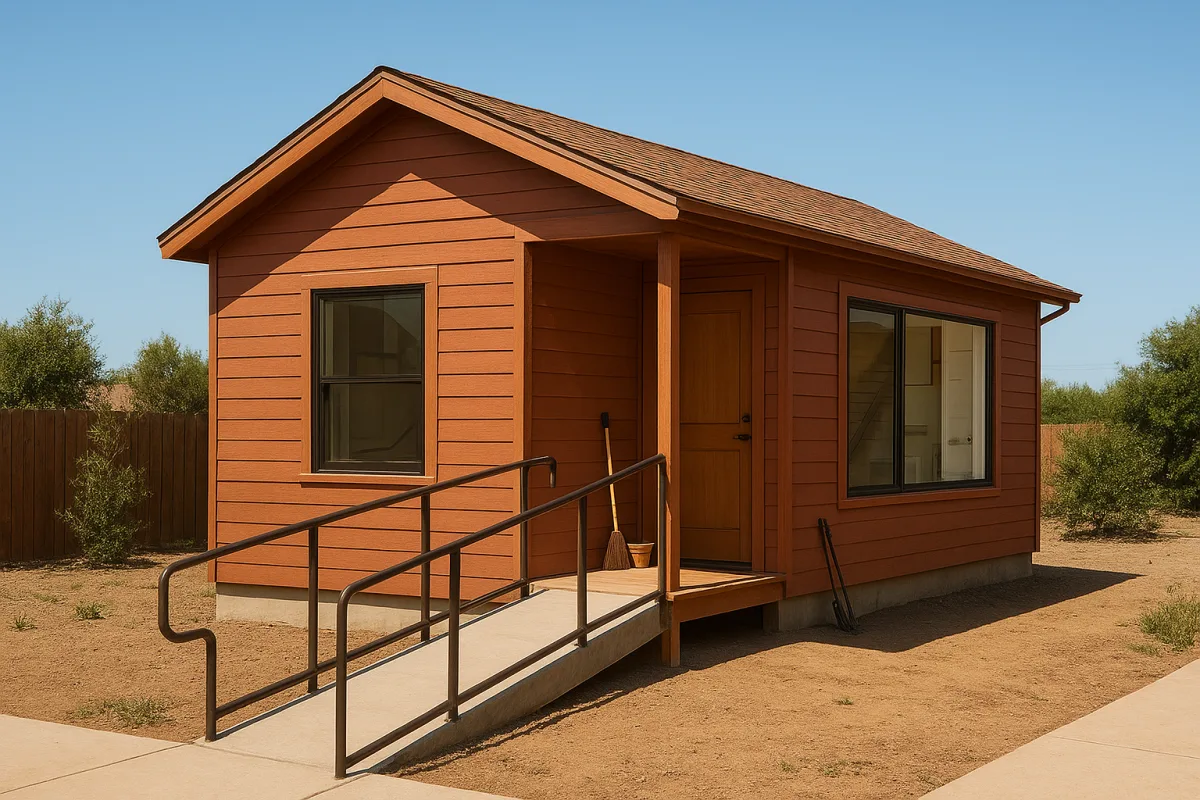
The shift is real, but it is not a mass-market retirement fix
Tiny-house living is increasingly being used as a practical later-life housing move: a way to lower monthly commitments, reduce upkeep, stay near family, or make a fixed income stretch further. The evidence is clear across independent homeowner profiles, even if national data remains thin.
What stands out is not one ideal tiny-house story. It is the repetition of the same decision across different places and circumstances: older homeowners selling larger homes, widows avoiding a new conventional mortgage, and renters choosing a smaller home to create room in an uneven budget.
Tiny Home Tours profiled a 70-year-old homeowner who moved from an aging conventional house into a tiny home in a gated community. Her main complaint was not square footage. It was the accumulated work: painting, cleaning, aging wiring, and the feeling of being unable to keep up.
A separate Tiny Home Tours profile follows a retiree on a fixed income in Durango, Colorado, who bought a tiny home after years in an RV. She paid $96,000 for the house and another $10,000 for transport from Virginia, then rents a lot for $865 monthly, with utilities extra.
Tiny House Expedition featured a 63-year-old Florida resident who downsized from an 1,100-square-foot home after her son moved out. Her 269-square-foot house sits in a community where she pays $684 per month in lot rent, plus water, sewer, and utilities.
The pattern also reaches people who are not retired. In another Tiny Home Tours profile, a self-employed renter pays $1,100 monthly for a tiny home in a mountain town, with most utilities included but internet, electricity, and seasonal heating costs separate. Her reason is flexibility, not ownership.
Finally, Tiny House Giant Journey profiled a couple who went from 2,500 square feet to a 399-square-foot home in an East Texas tiny-home community. Their house cost $130,000, and their $699 lot rent covers water, sewer, landscaping, and amenities.
That is enough repeated evidence to call this a visible housing trend among people reassessing work, retirement, and home maintenance. It is not enough to claim that tiny homes are broadly replacing conventional retirement housing or that they work for everyone.
Why downsizing is landing differently now
The financial appeal is easy to understand. Conventional housing costs remain high in many desirable retirement areas, while a small home can reduce the purchase price, heating load, furnishing needs, and time spent maintaining rooms nobody uses.
The Durango homeowner featured by Tiny Home Tours made the comparison directly. She said ordinary homes in her chosen Colorado town were generally well above $1 million, making a $96,000 tiny house and an $865 monthly lot payment her realistic route into the area.
That does not mean small always means cheap. HomeGuide estimates a custom-built 269-square-foot tiny home at roughly $67,250 to $121,050 in 2026, using a range of $250 to $450 per square foot that includes shipping and installation. [2]
Those figures matter because online discussions often compare only the shell price with the cost of a full conventional house. A usable tiny-home budget needs to include the house, delivery, site work, utility hookups, permits, furniture, insurance, and either land payments or lot rent.
For people nearing retirement, the other savings can be just as important as the purchase price. The 70-year-old Tiny Home Tours homeowner describes the advantage as less painting, less cleaning, less searching for possessions, and fewer repairs she cannot reasonably handle herself.
The couple featured by Tiny House Giant Journey make a similar point from a larger starting point. Their 399-square-foot home takes about 30 minutes to clean, compared with the ongoing work of a former five-bedroom suburban home.
This is partly a money story, but it is also a labor story. A big house asks for time, physical ability, furniture, tools, and the willingness to manage repairs. Tiny living works best when someone sees those demands as burdens rather than proof of success.
Communities are becoming the practical middle ground
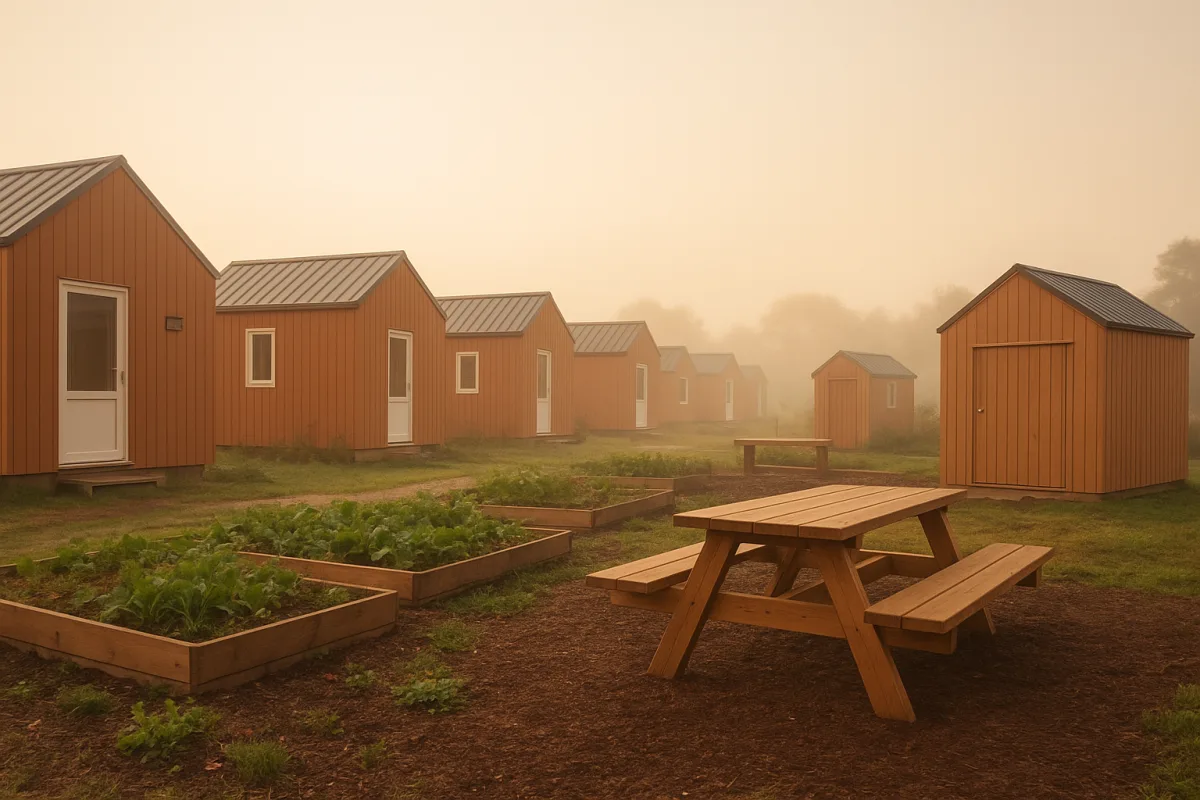
The profiles point to an important shift away from the fantasy of buying a rural parcel and parking a tiny house anywhere. Several residents chose planned tiny-home communities because the difficult infrastructure was already in place.
The 70-year-old Tiny Home Tours homeowner estimated that developing raw land independently could have cost around $300,000 after a well, electric service, sewer, road, landscaping, and other site work. That is a personal estimate, not a universal benchmark, but the underlying warning is sound.
In her case, the community bundled infrastructure, internet access, a gated setting, common space, and nearby neighbors. For an older solo resident, that combination can be more useful than an isolated parcel, even if it means recurring lot rent.
The Florida resident featured by Tiny House Expedition pays $684 monthly for her site, while the East Texas couple featured by Tiny House Giant Journey pays $699 with water, sewer, and landscaping included. The Durango resident pays more, $865, and covers utilities separately.
Those examples line up with broader estimates placing tiny-home-community lot rent around $400 to $950 monthly. [7] The range is wide enough that buyers should compare the whole monthly package, including water, sewer, trash, internet, landscaping, parking, storage, and maintenance charges.
Tiny homes may use less energy than larger houses, but bills do not disappear. Research collected by Tiny Homes Nationwide puts typical tiny-home utilities at about $140 to $380 monthly, depending on climate and setup. [4]
The mountain-town renter profiled by Tiny Home Tours offers a useful reality check. Her electricity runs about $120 in summer but roughly $300 in winter because of heating needs, despite living in a very small home.
That is why retirement planning should treat lot rent as housing cost, not a trivial add-on. A paid-off tiny house on a rented lot can still leave its owner exposed to rent increases, rule changes, a sale of the community, or a requirement to move.
The better retirement tiny house is rarely the tiniest one
The retirement-oriented profiles show a remarkably consistent design preference: people are choosing comfort and accessibility over the most compact possible floor plan. Real stairs, bathrooms that allow turning around, laundry, and room for guests all show up repeatedly.
The Durango homeowner required stairs rather than a ladder, even though she currently uses the loft bedroom. She also selected a layout with a ground-floor flex room that could hold a bed later if using stairs becomes difficult.
That is a sensible contingency, but it is still a compromise. A ground-floor sleeping area is better than a future promise to convert an office, craft room, or living room after a fall, illness, or mobility change forces the issue.
The Florida homeowner in Tiny House Expedition chose storage stairs, a regular flushing toilet, a 36-by-36-inch shower, separate washer and dryer units, and a 10-cubic-foot refrigerator. Her house is only 269 square feet, but it is arranged around daily independence rather than novelty.
The East Texas couple’s 399-square-foot home has a conventional bedroom, a dishwasher, a full-size refrigerator, and a loft used for work and resting. That is not the bare-minimum tiny-house formula, and it likely cost more, but it suits a couple who cook at home.
There is a trade-off here. More space and residential appliances make a tiny home easier to live in long term, but they also raise the build price, require more electrical capacity, and can complicate towing or placement.
For retirees, I would be cautious about making a sleeping loft the main plan, no matter how attractive it looks in a tour. Low headroom, steep stairs, nighttime bathroom trips, and laundry carried up and down steps become less charming over time.
Financial freedom depends on the financing and the land
The phrase “financial freedom” gets used loosely in tiny-house marketing. A smaller house can reduce spending, but it does not automatically produce a low monthly payment, easy financing, or a stable asset.
Tiny homes on wheels are generally personal property rather than real estate, which means buyers usually cannot use a standard mortgage. Alternative routes can include RV loans, personal loans, chattel loans, builder financing, and, for qualifying permanent foundation projects, construction or rural lending.
Those loans can require credit scores from roughly 580 to 680 or higher, with reported rates ranging from 5% to 14% APR depending on the loan type. That gap matters. A modest house payment at a high interest rate can undo much of the expected savings.
The East Texas couple featured by Tiny House Giant Journey paid $130,000 and still carry a mortgage, though they describe it as manageable after making a substantial down payment. Their experience is a reminder that downsizing does not always mean becoming debt-free.
Resale deserves the same sober treatment. Tiny homes on wheels can depreciate more like vehicles than houses, with estimates suggesting a 25% to 45% decline over five years. Foundation-based homes on owned land have a better chance of retaining value, but location and legality still matter. [5][6]
Customization also narrows the buyer pool. A house designed around one person’s hobby, pet, very specific storage needs, or unusual loft arrangement can be perfect for its first owner and harder to sell to the next one.
Regulation is improving in places, not everywhere
There are encouraging signs that local governments are taking small housing more seriously. Des Moines approved a Tiny Village proposal in June 2026 that will use a former school property, showing how underused land and buildings can be repurposed for smaller homes. [1]
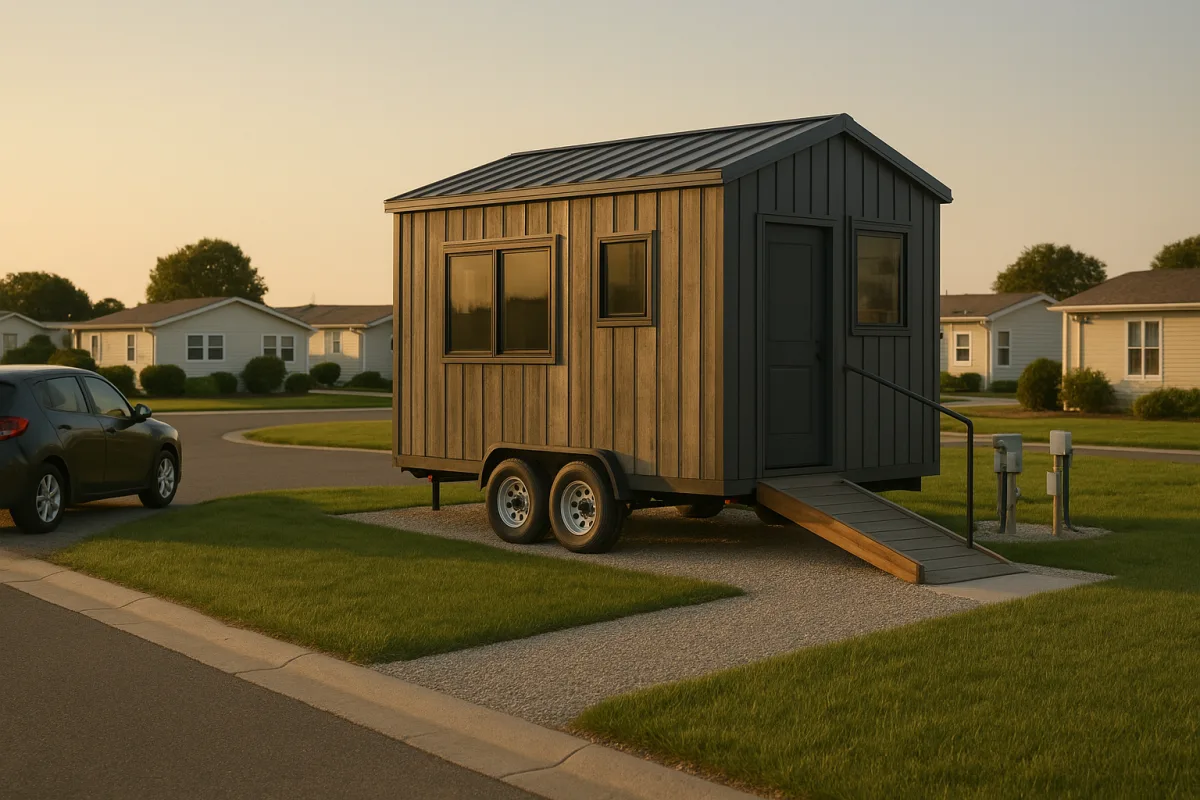
Still, one approved village is not a nationwide green light. Tiny homes on wheels are commonly treated as RVs, while foundation-based units may be regulated as accessory dwelling units or conventional single-family homes. Each category has different rules. [3][7]
Permit costs alone can range from about $150 to $6,500, depending on jurisdiction and project type. [3] That variance is a good reason to check with planning, building, health, and utility departments before ordering a house.
The right question is not, “Are tiny homes legal here?” It is, “Can this exact home, on this exact parcel or in this exact community, be occupied year-round under current local rules?”
For someone seeking retirement security, that distinction is crucial. Do not rely on a builder’s general assurance that a model is certified, road legal, or commonly placed in other states. Ask for written confirmation on occupancy, foundation requirements, utility connections, parking, and address eligibility.
A more realistic way to plan the move
The profiles suggest that tiny living succeeds when it follows a careful downsizing process rather than a rushed purchase. The Florida homeowner spent time sorting possessions and found the process freeing, while the East Texas couple say the harder challenge was resisting the urge to refill their smaller home.
Renting can be the lower-risk first step. The self-employed renter featured by Tiny Home Tours had already lived in a cabin, boat, and camper, yet still found a tiny home different enough to justify trying it before buying.
A trial period will show whether the issue is truly square footage or something more specific: inadequate kitchen workspace, lack of guest space, winter heating costs, poor sound separation, limited closet capacity, or an uncomfortable sleeping arrangement.
For a retirement build, make a short list of non-negotiables before considering finishes. For many people, that list should include ground-floor sleeping, step-free entry where possible, reliable heating and cooling, enough bathroom clearance, laundry access, weather-protected outdoor space, and legal year-round placement.
The small homes in these profiles are not effortless or universally inexpensive. Their strongest case is more modest: when the house, site, financing, and daily routine match, living tiny can exchange unused space and constant upkeep for a lower-cost, more manageable life.
Frequently Asked Questions
How can tiny house living support financial freedom in retirement?
Tiny house living can lower monthly housing costs and reduce upkeep, allowing retirees to stretch a fixed income further. Downsizing from a larger home to a tiny house often reduces expenses for heating, furnishing, and maintenance, which can free up money for other needs. However, tiny houses should be viewed as a lower-cost housing strategy rather than a guaranteed wealth-building investment.
What are the true costs of living in a tiny house for retirees?
The cost of a custom-built 269-square-foot tiny house ranges roughly from $67,250 to $121,050, excluding land, permits, utility hookups, furnishings, and community fees. Retirees also face ongoing expenses such as lot rent (typically $400 to $950 per month), utilities ($140 to $380 per month), and possible maintenance fees ($50 to $250 per month). Financing tiny homes on wheels often involves higher-interest personal or RV loans rather than traditional mortgages.
What design features make tiny houses suitable for retirement?
For retirement, tiny houses should prioritize single-level sleeping areas, real stairs instead of ladders, accessible bathrooms, dependable heating, and manageable outdoor maintenance. These features help accommodate physical limitations and reduce the burden of upkeep compared to loft-style or ultra-compact designs.
Are tiny house communities a good option for retirees?
Tiny house communities can offer practical advantages by bundling infrastructure such as water, sewer, electricity, internet, and landscaping, which can be costly and complex to set up independently. They also provide a social setting and common spaces that may appeal to older residents. However, community lot rents add to monthly expenses and vary widely, so retirees should weigh these costs against the benefits.
What should retirees consider before downsizing to a tiny house?
Retirees should verify zoning laws, permits, lot tenure, financing options, and resale potential before committing to a tiny house. Renting a tiny home first can help test whether the space, storage, kitchen, privacy, stairs, and utility costs fit their lifestyle. It is important to understand that tiny houses on wheels may be classified as RVs, affecting legality and financing.
How we researched this
This article was assembled from 5 video sources across 3 channels, 7 cited references.
Nothing here is based on hands-on testing. Where a figure or finding appears, it belongs to the source cited beside it, and the writing says so rather than implying otherwise. Every source is listed below so you can check it.
Sources
She Owns Her Tiny Home AND Land at 70, Retiring Right — Tiny Home Tours
On a Fixed Income, a $96K Tiny Home Was Her Way To Retire — Tiny Home Tours
This is My Tiny Paradise! 63-Year-Old's Dream Tiny House — Tiny House Expedition
Renting Tiny Gave Her More Time, Money and Freedom — Tiny Home Tours
We Downsized to a Beautiful Tiny Home in a Tiny House Community — Tiny House Giant Journey
Zoning Laws for Tiny Homes: ADUs, Permits, and Penalties - LegalClarity
Tiny House Depreciation Value Over Time: What Tiny Homeowners Need to Know in 2026
Watch Living Tiny for Financial Freedom and Retirement on Youtube
Also from the sources
Related Articles
Aging in Place Tiny Home Bathroom Design Essentials
Learn key aging in place tiny home bathroom design tips for accessibility, safety, and comfort in small-space living.
Tiny House Living Stories
Explore tiny house living stories and downsizing experiences with real cost, layout, and lifestyle insights from long-term tiny home residents.
Downsizing to Tiny Homes in Communities
Explore downsizing to tiny homes in communities, covering costs, challenges, storage, and lifestyle changes for small-space living.
Tiny Homes for Aging in Place: Design and Cost Insights
Explore tiny homes for aging in place, covering design, monthly costs, financing, and accessibility for seniors on fixed incomes.