Tiny House Communities: Costs, Dynamics, and Benefits
Explore tiny house communities, their costs, governance, and social impact. Understand what living in a tiny house community entails.
The Rise of Tiny House Communities: Understanding the Mechanics, Costs, and Impact on Residents
In recent years, tiny house communities have been gaining traction as a viable alternative to traditional housing. This trend is not only about downsizing physical space but also about embracing sustainability, community living, and an alternative lifestyle. Understanding how these communities operate, including their financial and logistical frameworks, is crucial for anyone considering this lifestyle.
A New Model of Living: What is a Tiny House Community?
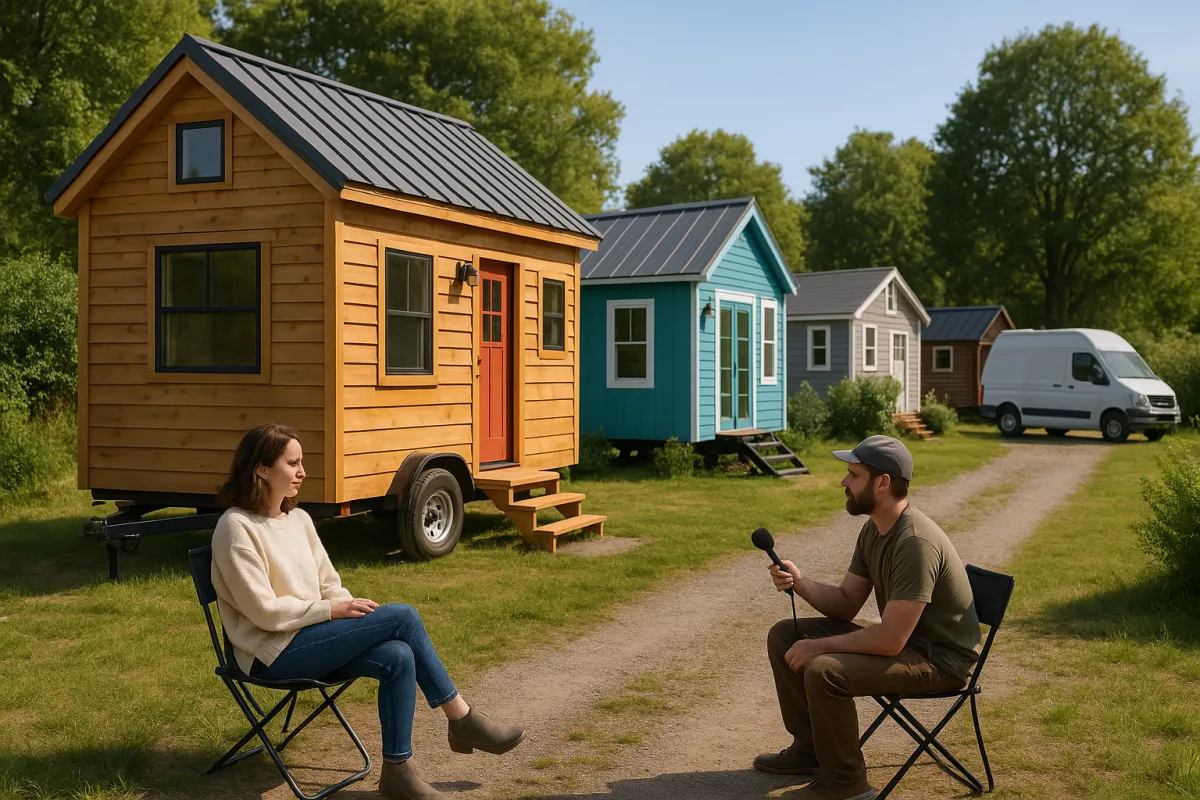
At its core, a tiny house community is a cohesive living environment where residents occupy small homes, typically under 400 square feet, often on wheels (known as tiny homes on wheels, or THOWs). These communities often center around shared values, such as sustainability and cooperation, and may include communal spaces for activities, gardening, or social gatherings. For example, the Tiny Timbers Agrihood community mentioned by Tiny House Giant Journey features a garden-centric design where residents participate in the upkeep and harvesting of communal gardens. This model fosters not only a sense of belonging but also a commitment to health and wellness through shared agricultural practices.
The Financial Framework: Understanding Costs
While the appeal of tiny house living includes reducing living expenses, understanding the financial mechanics of these communities is essential. Residents usually do not own the land; instead, they lease their space within the community. At Tiny Timbers, for example, the leasing cost is $499 per month, which covers the lot but excludes utilities. Residents are responsible for their own electric, water, and sewer bills, which can add anywhere from $100 to $300 monthly, depending on usage. This structure can lead to a total monthly expenditure ranging from approximately $600 to $800, depending on individual utility consumption and other living expenses like internet (estimated at $50 to $100).
The initial investment in a tiny home can vary significantly. Tiny homes on wheels typically cost between $30,000 and $180,000, with the average price hovering around $85,000 to $110,000. However, this figure often excludes crucial additional costs, such as land acquisition, permits, utility hookups, and transportation, which can escalate the total investment substantially.
Zoning Regulations: Navigating Legalities
One of the most significant challenges facing tiny house communities is the complex web of zoning regulations. Many local governments do not recognize tiny homes as permanent residences, often categorizing them as RVs or temporary structures. This designation can restrict where residents can legally park or live. For instance, while California has made strides in accommodating tiny homes through building codes like Appendix Q of the International Residential Code (IRC), many other states still impose stringent minimum dwelling size requirements that can range from 600 to 1,200 square feet. This discrepancy complicates the establishment of tiny house communities in various jurisdictions.
In addition to zoning regulations, residents must often contend with the rules set forth by homeowners' associations (HOAs) within these communities. HOAs can impose strict guidelines on aesthetic standards, maintenance, and even rental policies, which can lead to unforeseen costs and conflicts among residents. For example, if a community mandates specific landscaping or exterior colors, residents may incur costs related to compliance.
The Governance Model: Community Dynamics
The governance structure of a tiny house community can significantly influence residents' experiences. Many communities operate on cooperative models, where residents collectively manage shared responsibilities such as maintenance and community events. This can be a double-edged sword; while it fosters a sense of unity and shared purpose, it can also lead to challenges in coordination and compliance. For instance, a community may decide to host regular meetings for decision-making, but differing opinions on projects or expenditures can spark conflict.
Additionally, some communities may have a management team or HOA that oversees operations, which can introduce additional costs through management fees. These fees can vary widely based on the services provided, from basic maintenance to more extensive community programming.
The Social Impact: Community Living
Beyond the financial and logistical considerations, tiny house communities offer a unique social environment. Residents often cite the benefit of close-knit relationships fostered through shared spaces and communal efforts. In the Tiny Timbers Agrihood example, residents engage in gardening and communal meals, creating opportunities for spontaneous social interactions. This aspect of living can serve as a remedy for the isolation many experience in traditional housing setups, where neighbors may remain strangers.
However, it’s important to acknowledge that this lifestyle is not without its trade-offs. For some, the close proximity to neighbors can lead to conflicts over differing lifestyles or noise levels. Additionally, the commitment to community upkeep may not appeal to everyone, especially those who value privacy or independence.
Conclusion: Weighing the Pros and Cons
As the tiny house movement continues to expand, the emergence of tiny house communities reflects a shift in societal values towards sustainability, community, and alternative living. However, potential residents must engage critically with the realities of living in such a community. From understanding the financial obligations to navigating zoning laws and community dynamics, it is essential to conduct thorough research and consider personal priorities before making the leap into tiny living.
For many, the benefits of reduced financial burdens, enhanced community connections, and sustainable living practices can outweigh the challenges. Nonetheless, it’s crucial to approach this lifestyle with a clear understanding of what it entails, ensuring that the dream of tiny living aligns with individual needs and circumstances.
Frequently Asked Questions
What are the benefits of living in tiny house communities?
Living in tiny house communities offers residents reduced financial burdens, enhanced community connections, and opportunities for sustainable living practices. The communal environment fosters close-knit relationships through shared spaces and activities, such as gardening and communal meals, which can alleviate feelings of isolation often experienced in traditional housing.
How do tiny house communities operate financially?
Residents typically lease their space within the community, with costs varying based on location and amenities. For example, at Tiny Timbers, the leasing cost is $499 per month, excluding utilities, which can add an additional $100 to $300 monthly. The initial investment in a tiny home can range from $30,000 to $180,000, depending on various factors.
What zoning regulations affect tiny house communities?
Zoning regulations can significantly impact tiny house communities, as many local governments classify tiny homes as RVs or temporary structures, restricting where they can be parked or lived in. While some areas, like California, have adopted specific building codes to support tiny homes, others impose minimum dwelling size requirements that can complicate compliance and establishment.
What is the social impact of tiny house communities?
Tiny house communities can create a unique social environment where residents build close relationships through shared responsibilities and communal activities. However, the close proximity to neighbors may lead to conflicts over lifestyle differences, and the commitment to community upkeep may not appeal to everyone, particularly those who value privacy.
Sources
This Tiny Home "Agrihood" is making everyone move to the country, Tiny House Giant Journey
Honor's bonkers emoting robot-arm camera phone is actually for sale, New Atlas
Raven Outlook Is a Gorgeous Park Model Tiny With a Huge Bay Window and Full-Size Comforts, autoevolution
Can You Put a Tiny House on Your Property: Zoning Rules - LegalClarity
Tiny House Zoning Laws: Where Tiny Homes Are Legal | Zonloty
Pennsylvania Tiny Home Zoning Laws 2026 | Luxe Box Properties
How to Buy a Tiny House: Financing, Zoning, and More - LegalClarity
Tiny Home Financing 2026: How to Get a Mortgage for a Tiny House
Average Cost of Living Off the Grid 2026: Full Breakdown & Monthly Expenses - tinyhousel.com
Hidden Costs of Living in a Tiny House Community (2026 Guide) - tinyhousel.com
Tiny House Communities in the U.S.: Types, Regulations, and Costs - Simpli.com
Tiny Home Cost by Build Type 2026: Prices, Comparisons & Budget Guide - tinyhousel.com
Average Cost to Build a Tiny House in 2026 | Updated Pricing & Budget Guide - tinyhousel.com
Tiny Home Cost In 2026: The Full Breakdown, Not Just The Sticker, PERCH
Watch Tiny House Communities on Youtube
Related Articles
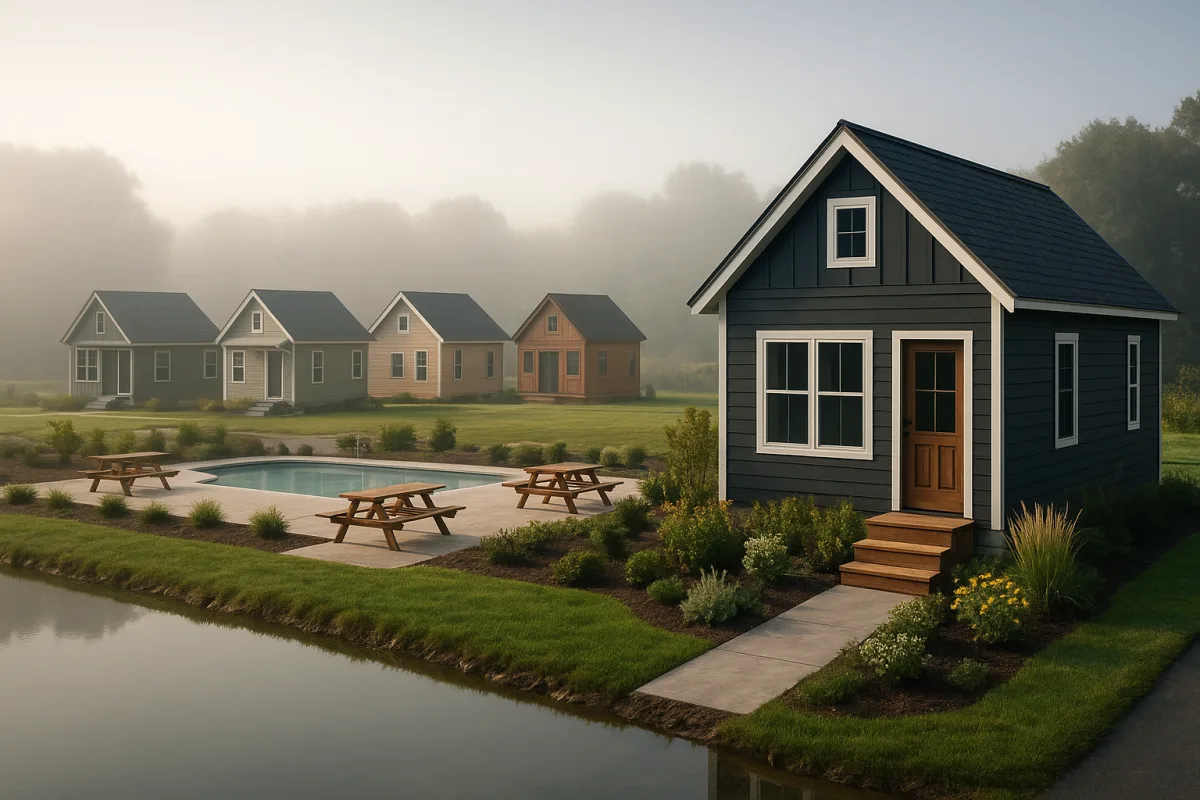
Tiny House Resort Living
Explore tiny house resort living by comparing foundation builds with lease-lot communities, costs, amenities, and lifestyle trade-offs.
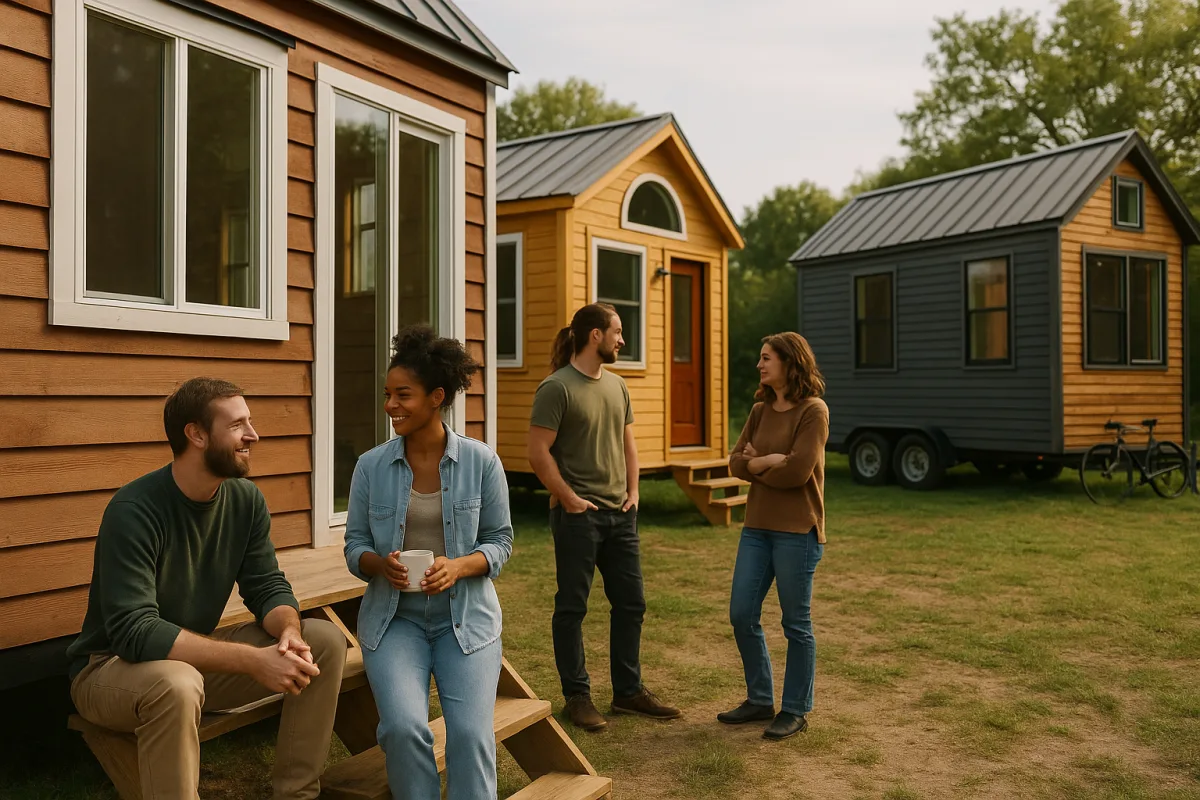
Community Living in Tiny Homes: A Growing Trend
Explore community living in tiny homes, its benefits, challenges, and why it's becoming a popular alternative lifestyle.
Prefab Backyard ADUs: Costs, Permits, and Installation Guide
Learn about prefab backyard ADUs, including costs, permits, installation, and financing to plan your small backyard housing project effectively.
Prefab Tiny Homes and ADUs
Explore prefab tiny homes and ADUs with modern designs, costs, legal tips, and site considerations for small footprint living.