Tiny House Resort Living
Explore tiny house resort living by comparing foundation builds with lease-lot communities, costs, amenities, and lifestyle trade-offs.
Tiny House Communities and Resort Living: Comparing a Family Foundation Build With Two Lease-Lot Villages
The quick list
- Best overall: Liberty Tiny Village, Aubrey, Texas: for 55+ buyers who want a managed, amenity-heavy community and can absorb a $950 monthly lease.
- Best value: LuxTiny Lakeside, Lakeside, Arizona: for downsizers who prioritize lower monthly site costs, outdoor recreation and a larger-than-average leased lot.
- Best for larger households and long stays: the Tennessee family foundation build featured by Tiny House Expedition: for households wanting ownership of land and a home that can be expanded, rather than a resort-village lifestyle.
Tiny-house living has split into two fairly different propositions. One is the traditional small house on private land, where you control the site and take on nearly every maintenance, zoning and financing problem yourself.
The other is the managed tiny-home village, which trades some independence for utility connections, landscaping, neighbors and shared amenities. That can be a sensible bargain, but it is still a leasehold arrangement, not the same thing as owning a conventional house and lot.
The biggest decision is not whether you like tiny homes. It is whether you want a home base with predictable community services, or land control and the flexibility to adapt the building as your household changes.
At a glance: costs, space and lifestyle
| Option | Location and resident profile | Home size or site size | Reported price | What lot rent includes | Main lifestyle trade-off |
|---|---|---|---|---|---|
| LuxTiny Lakeside | Lakeside, Arizona, open to tiny homes and park models | Average lot exceeds 3,500 sq ft | $379 to $479 monthly lot lease [2] | Water, sewer and trash | Lower cost, but fewer resort-style facilities and unclear immediate availability |
| Liberty Tiny Village | Aubrey, Texas, adults aged 55+ | Homes capped at 399 sq ft; 25 by 67-foot lots [4] | $950 monthly lot rent; homes reportedly $75,000 to $160,000 | Water, sewer, trash, basic internet and landscaping [4] | Strong amenities, but an age restriction, higher recurring cost and a full wait list |
| Tiny House Expedition family build | Southeast Tennessee, family of seven on private acreage | 660 sq ft reported, on roughly five acres | Build cost not disclosed | Owner-managed utilities and site | More control and room for family life outdoors, but no shared services or turnkey maintenance |
Sticker prices need context. The $379 to $479 LuxTiny figure and Liberty’s $950 are site leases, not house payments. They exclude electricity at both communities, and Liberty residents also pay for propane. [2] [4]
The house itself is a separate purchase, as are delivery, tie-downs or foundation work where required, insurance and any loan costs. That distinction matters because a modest monthly lease can sit beside a substantial RV or personal-loan payment.
Best value: LuxTiny Lakeside for outdoorsy downsizers
Tiny House Talk reports that LuxTiny Lakeside occupies six acres in Arizona’s White Mountains, with 37 spaces rather than the 50 originally planned. The average lot is more than 3,500 square feet, which is meaningful breathing room by tiny-home-community standards.
The setting is the main draw. The community is close to Scott’s Reservoir, Rainbow Lake and Show Low Lake, and it has a walking path with benches. This is more of a quiet base near outdoor recreation than a full resort compound.
LuxTiny accepts custom tiny homes, park models and outside-built tiny homes, which gives buyers more flexibility than a village requiring one builder’s models. That can help if you already own a suitable home on wheels or have a preferred builder.
The monthly price is also the most accessible here. LuxTiny’s published lease range has varied, while current research places it at $379 to $479 depending on lot size, with water, sewer and trash included. [2] Electricity and internet are not included, so do not read that price as all-in housing.
Availability is the practical snag. Tiny House Talk found conflicting notices on LuxTiny’s own pages, ranging from “100% filled” to Phase II “nearly filled,” plus mentions of future development. Treat any advertised opening as unconfirmed until the operator identifies an actual site and move-in date.
For a solo resident, couple or active retiree, LuxTiny’s larger lots and lower lease price are compelling. It is less convincing for someone expecting a pool, organized programming, formal security or extensive managed grounds.
Best overall for amenity seekers: Liberty Tiny Village
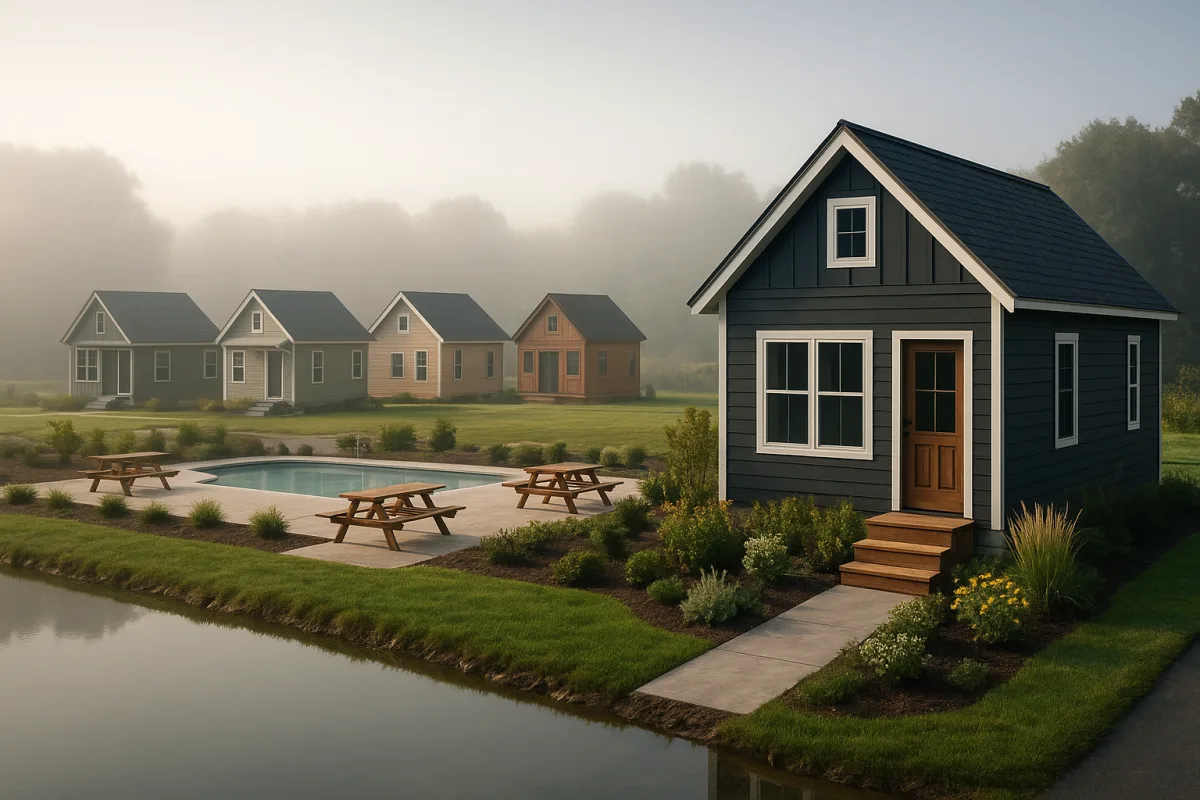
Liberty Tiny Village in Aubrey, north of Dallas-Fort Worth, is a more conventional resort-style proposition. Tiny House Talk describes a gated street grid, pond, fishing dock, dog park and a pool overlooking the water.
The demographic is unusually clear: this is a 55+ community. That focus can be a benefit for residents looking for quieter neighbors and a peer-aged social environment, but it rules out younger buyers and multigenerational households outright.
Lots measure 25 by 67 feet and have room for two cars, a 911 address and 100-amp electrical service. [4] The on-site homes are RV-classified luxury tiny homes limited to 399 square feet, according to Liberty’s FAQ. [4]
That 399-square-foot ceiling is enough for a well-planned one- or two-person home, especially with a porch and outdoor living area. It is not much interior margin for regular guests, mobility equipment, hobby storage or a resident who works from home full time.
The village’s $950 monthly lot rent is high beside LuxTiny’s rate, but the service package is broader. It includes water, sewer, trash, basic internet and ongoing landscaping, including grass, flower beds and sprinklers. [4]
Basic internet is not necessarily sufficient for streaming, video calls or home-office use. Liberty’s own information distinguishes it from streaming service, so prospective residents should ask about speeds, data limits and whether a private connection is possible. [4]
Electricity remains extra, and propane is also a separate cost at Liberty. That matters in North Texas summers, where aggressive air-conditioning use can noticeably change the real monthly budget.
The community also operates Try It Tiny rentals, allowing prospective residents to spend a short stay in the setting before making a longer commitment. That is a useful feature, particularly because the lifestyle is much more structured than simply parking a tiny home on rural land.
There is, however, no shortcut around availability. Liberty lists Phase I as full and says its Phase II and III wait list is full as well. The pool and some other advertised amenities are tied to later phases, so buyers should ask which features exist now, not just what is shown in future-facing marketing.
Tiny House Talk cites Business Insider reporting that Liberty homes range from $75,000 to $160,000. That is a wide band, and it should be treated as a reported market range rather than a quoted current inventory price. The home price does not include the continuing lot lease.
Best for households needing flexibility: a foundation-built family tiny home
The family of seven featured by Tiny House Expedition represents the other end of the tiny-home spectrum. Their Tennessee home sits on about five acres and is described as a 660-square-foot stick-built house, designed around daily family use rather than community amenities.
The home includes a full kitchen, dishwasher, double-door refrigerator, pantry storage, dining and homeschool area, a main-floor bedroom and substantial high shelving. Two mini-splits and spray-foam insulation handle heating and cooling, according to the family’s tour.
This is not the usual image of tiny-house resort living, and that is precisely why it belongs in the comparison. The family uses outdoor space, a porch, play areas and pasture as an extension of the house, rather than relying on a shared clubhouse or pool.
The layout is candid about its limits. The parents use under-bed storage instead of a dresser, a baby sleeps in a pack-and-play near their closet, and the custom dining table currently fits everyone because the children are still young.
The family also says the house will eventually need an addition as the children become teenagers. A stick-built home on owned land makes that possible, but it also means the owners bear the cost, approvals and disruption of any expansion.
No build price was disclosed in the Tiny House Expedition feature, so this is not a direct cost winner over either lease-lot community. It is a different financial structure, involving land ownership, a permanent building and owner responsibility for site work.
Financing changes the comparison
A tiny home on a permanent foundation may qualify as real property, opening the door to FHA, conventional, VA or USDA financing. Typical reported down payments run from 3.5 to 20 percent, with credit-score minimums around 580 to 620 or higher. [1]
That sounds straightforward, but lender rules are inconsistent. Some lenders accept homes around 200 square feet, while others require at least 400 square feet, so a borrower should obtain a lender’s minimum-size requirement in writing before committing to plans. [1]
Park models such as those at Liberty are usually treated as RVs, not conventional real estate. They are commonly financed with RV loans lasting seven to 20 years at roughly 7 to 12 percent interest, or personal loans lasting three to seven years at about 8 to 15 percent. [1]
A chattel loan may be possible when a home sits on leased land, but terms and eligibility vary sharply by lender and community. The practical point is simple: compare total monthly debt service plus lot rent, not merely the home’s advertised purchase price.
The less-visible costs and risks
Off-grid living is not automatically cheaper, either. Research on off-grid small homes estimates average monthly operating costs of $200 to $525 for solar maintenance, water hauling, propane and internet. [3] That is useful context when comparing a rural private site with utility-connected community living.
Neither LuxTiny nor Liberty has publicly documented resale data for homes within its own community. Buyers should not assume a tiny home will appreciate like a conventional detached house, particularly when it is RV-classified and located on leased land.
General tiny-home resale reporting suggests depreciation of 10 to 50 percent below build cost and selling periods of three to 12 months or longer. [6] Those figures are not specific to either village, but they are a reasonable warning against buying based on presumed resale strength.
Finally, zoning remains local. Arizona and Texas do not offer a uniform statewide path for tiny-house communities, and rules can change between counties, towns and individual parcels. Prospective residents should verify permits, occupancy rules and installation requirements directly with local planning authorities. [5]
Who each option suits
LuxTiny Lakeside suits a couple, solo downsizer or recreationally minded retiree who wants a utility-connected site near lakes and trails without paying for a large amenity package. It is the value choice, provided an actual available lot can be confirmed.
Liberty Tiny Village suits a 55+ buyer who values predictable grounds maintenance, neighbors in a similar life stage, a dog park, fishing access and a more polished social setting. It makes most sense for buyers comfortable with a premium lease and limited interior square footage.
The Tennessee foundation build featured by Tiny House Expedition suits a household that wants to own land, use outdoor space heavily and adapt the structure over time. It is the better model for a larger family, but only if the site, zoning and construction budget support it.
Frequently Asked Questions
What are the differences between foundation-built tiny homes and lease-lot tiny house communities?
Foundation-built tiny homes are placed on private land, giving owners control over the site, the ability to expand or adapt the home, and eligibility for conventional mortgage financing (subject to lender size rules). Lease-lot communities involve renting a lot within a managed village, trading some independence for shared amenities and utility connections, but the arrangement is leasehold rather than ownership of land. Maintenance and zoning responsibilities also differ, with foundation homes requiring owner management versus community-managed services in lease-lot villages.
What amenities do resort-style tiny house communities offer?
Resort-style communities like Liberty Tiny Village include amenities such as landscaping, a pond-side pool, basic internet, and managed grounds. These communities often feature gated street grids and shared recreational facilities. In contrast, lower-cost communities like LuxTiny Lakeside offer fewer resort-style amenities, focusing more on outdoor recreation nearby rather than extensive on-site services.
How much does it cost to live in a tiny house resort community?
Monthly lot rents vary: LuxTiny Lakeside charges between $379 and $479, including water, sewer, and trash but excluding electricity and internet. Liberty Tiny Village charges about $950 monthly, which includes water, sewer, trash, basic internet, and landscaping, but excludes electricity and propane. These fees cover only the lot lease; additional costs for the home, delivery, setup, utilities, insurance, and financing should be budgeted separately.
Are tiny house communities a good option for long-term living?
Tiny house communities can be suitable for long-term living depending on priorities. Foundation-built homes offer more control, space, and conventional financing options, making them better for larger households or those wanting to adapt their home over time. Lease-lot communities provide predictable services and amenities but involve leasehold arrangements, age restrictions in some cases, and less flexibility in home modification.
What are the benefits of living in a 55+ tiny house community?
Communities like Liberty Tiny Village cater to residents aged 55 and over, offering resort-style amenities such as pools, landscaping, and basic internet included in the lot rent. These communities provide a managed environment with shared services and social opportunities, which can appeal to retirees seeking convenience and community. However, they come with higher monthly lease costs and age restrictions.
How we researched this
This article was assembled from 1 video source, 2 published articles, 6 cited references.
Nothing here is based on hands-on testing. Where a figure or finding appears, it belongs to the source cited beside it, and the writing says so rather than implying otherwise. Every source is listed below so you can check it.
Sources
Family of 7 Living their Values in a Tiny House on a Foundation — Tiny House Expedition
LuxTiny Lakeside: A Tiny Home Community in the White Mountains — Tiny House Talk
Liberty Tiny Village: A 55+ Resort Community in Aubrey, TX — Tiny House Talk
Tiny Home Financing — RV Loans, Personal Loans & Mortgage Options (2026)
LuxTiny – LUXURY TINY HOME LIVING – Luxtiny – Luxury Tiny Home Community
Do Tiny Houses Hold Their Value? Resale Reality in 2025–2026
Watch Tiny House Communities and Resort Living on Youtube
Related Articles
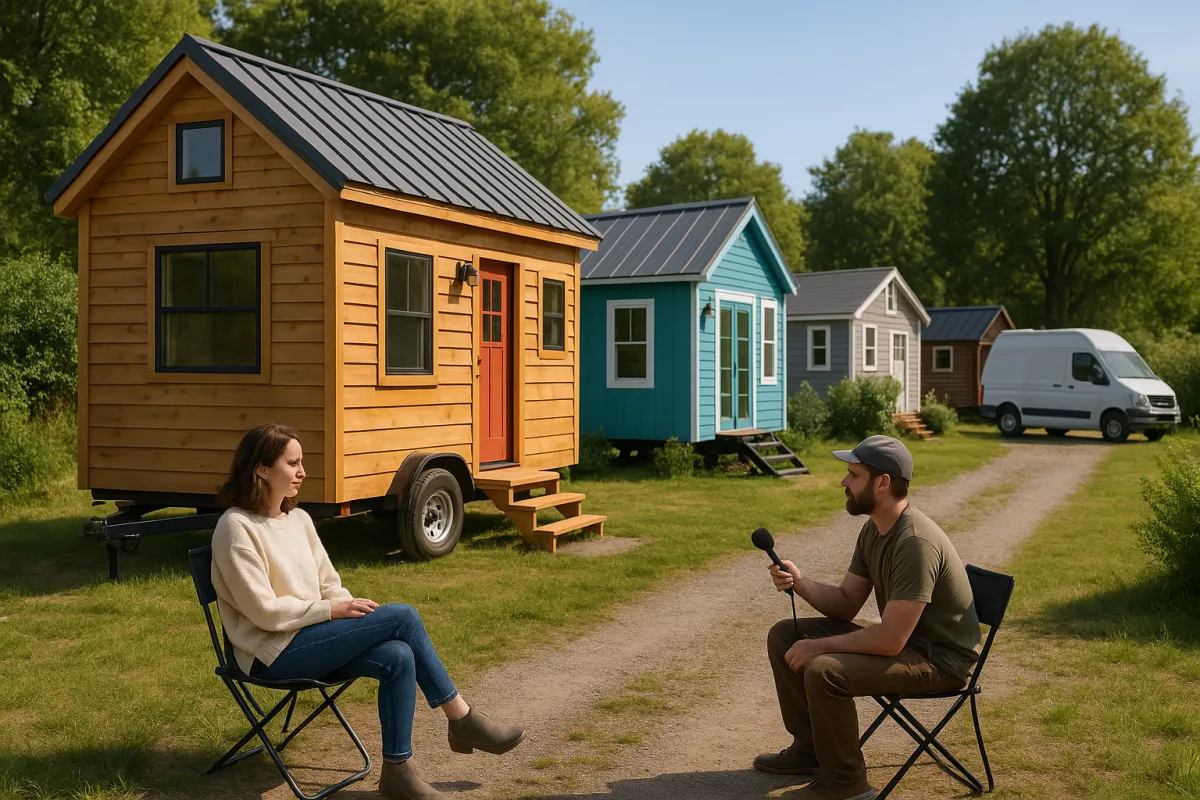
Tiny House Communities: Costs, Dynamics, and Benefits
Explore tiny house communities, their costs, governance, and social impact. Understand what living in a tiny house community entails.
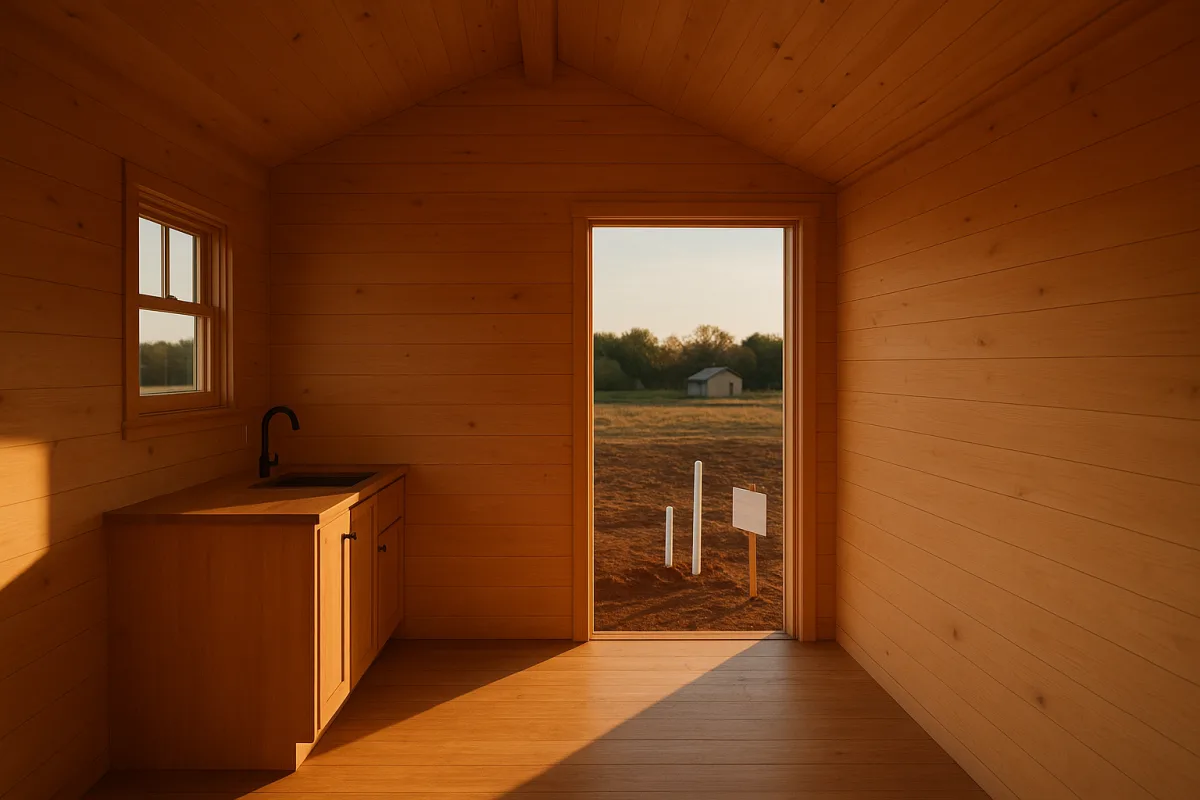
Building Tiny Homes on Foundations
Learn about building tiny homes on foundations, including costs for site work, permits, and utilities to plan your land-based tiny house budget.
Affordable Prefab Tiny Homes Under 100K
Explore affordable prefab tiny homes under 100K with cost breakdowns, kit options, and legal considerations to help you choose the right small home.
Community Living in Tiny Homes: A Growing Trend
Explore community living in tiny homes, its benefits, challenges, and why it's becoming a popular alternative lifestyle.