Tiny Home Financing and Placement Costs Explained
Learn about tiny home financing options and the true costs of placing a tiny home, including zoning, delivery, and site preparation fees.
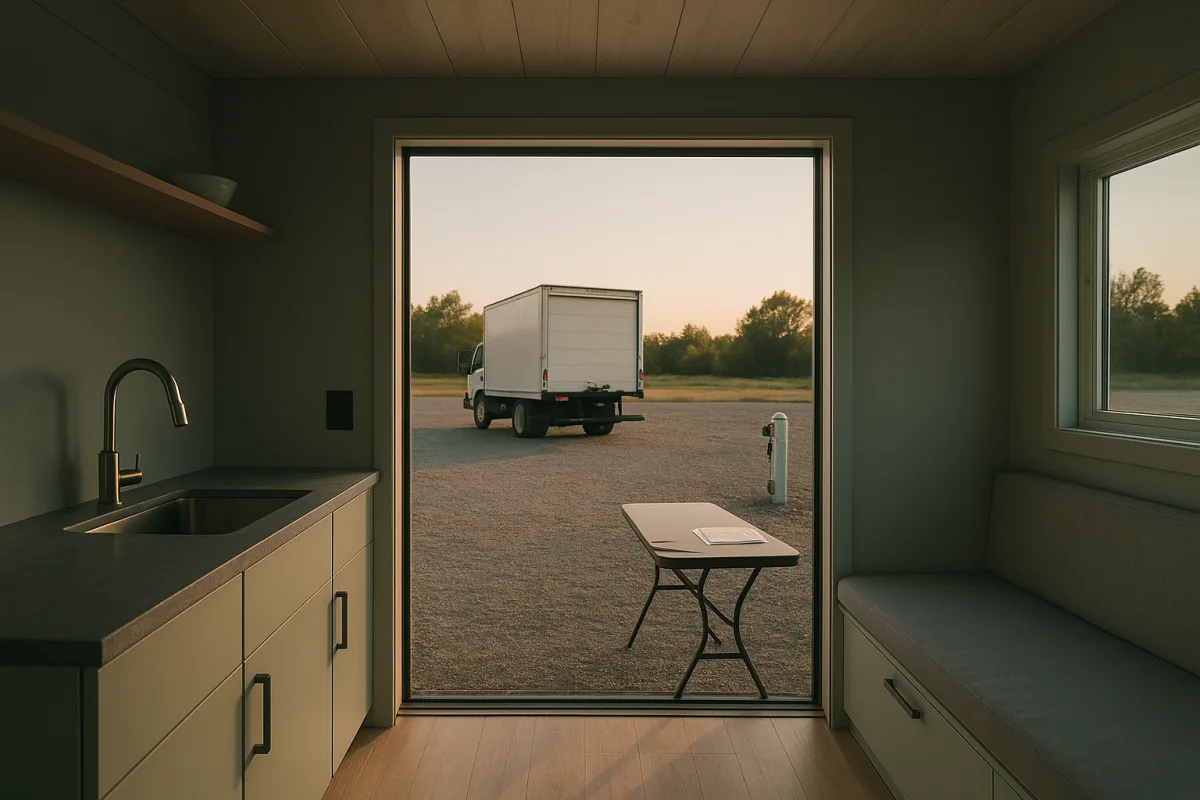
First, solve the parking problem
The frustrating truth is that a towable tiny home is easier to buy than to place. Local rules can classify it as an RV, a temporary structure, a park model or something else entirely, and each classification changes where it can stay. [8][9]
Do not assume that a certification label settles the question. Dragon Tiny Homes lists the Sora 16 as NOAH certified, while Great Lakes Tiny Home lists the Modern Twilight as RVIA-sealed and built to ANSI A119.5 standards. Those labels can help with lending or insurance, but local zoning still controls occupancy.
Before putting down a deposit, call the planning department where the home will sit. Ask whether a tiny home on wheels can be occupied year-round, whether it needs to be in an RV park, and whether water, sewer and power connections are allowed.
Also ask about minimum dwelling size, which can be a quiet deal-breaker. Many places require homes larger than the 135-square-foot Sora 16, and local rules may limit an RV-style unit to seasonal or temporary use. [8][9]
California provides one example, not a national template. State rules allow tiny homes on wheels as temporary accessory dwelling units beside a permitted single-family dwelling, subject to local development standards. That can be useful for backyard placement, but it is not the same as unrestricted standalone housing. [1]
Truck campers have a different placement problem. You can travel with the Kimbo 6 more easily than with a 34-foot tiny home, but overnight use remains subject to campground, public-land, parking and local residential rules. Legal to drive does not mean legal to live in. [9]
Then set a real budget, not a sticker-price budget
Every listed price below is for the unit, not a finished life on a piece of land. Delivery, tax, permits, site preparation, utility work, insurance, furnishings and lot rent can change the number sharply.
The Kimbo 6 hard-side truck camper, listed by Kimbo from $27,990, is the least expensive entry in this group. That is the base shell price, and Kimbo lists the empty unit at 830 lb. [2]
A more equipped Kimbo 6 with a Dickinson propane heater, solar and lithium upgrades, an awning, recovery mounts or an interior bath can land around $30,000 to $35,000, according to the research brief. Truck modifications such as airbags and payload-rated tires may add another $2,000 to $5,000 if the truck is close to its limit.
Kimbo does not publish a fixed delivery or installation charge. Industry estimates in the research brief put delivery and installation anywhere from $400 to $6,000, while taxes and permits may range from roughly $100 to $4,000 depending on location. Those are broad estimates, not Kimbo quotes.
Dragon Tiny Homes’ move-in-ready Sora 16 is listed by Tiny House Talk at a $37,950 inventory-special price. The same listing also shows $43,420 for an order-now version, so confirm which price applies before treating either number as current. [5]
New Atlas reports that Dragon Tiny Homes’ upgraded Sora 20 is offered at $57,800. That price buys a noticeably more livable 20-foot layout, though it still retains the basic tiny-house compromises of a loft bedroom and a compact bathroom.
At the larger end, Great Lakes Tiny Home lists its Modern Twilight 251222 at $132,600. Mint Tiny Homes’ Loft Ruby, sold through O’Connor RV, is listed at $153,930 CAD plus tax, or about $113,322 USD subject to exchange-rate movement.
Those bigger figures do not necessarily mean the homes are ready for a vacant parcel. A trailer home still needs a compliant location, access, leveling, delivery logistics and potentially water, sewer, electrical and internet connections. That work can cost more than a buyer expects.
Lot rent deserves its own line in the budget. Industry estimates place it around $250 to $1,500 per month depending on location and amenities. [7] A cheap tiny home on an expensive monthly site can become a poor long-term value.
Choose the kind of mobility you will actually use
The Kimbo 6 is for the buyer who already owns, or intends to own, a compatible midsize pickup. Kimbo says it fits Tacoma-size and other midsize trucks, but specifically warns buyers to verify payload before installation. [2]
Its fit requirements are unusually important. On truck beds six feet or longer, the tailgate can close. On shorter beds, the tailgate remains down. [2] That may be acceptable for travel, but it affects rear access, security and how the truck functions day to day.
Kimbo lists the camper at 830 to 1,200 lb with modules and when fully loaded. [2] That range is more meaningful than the dry-shell number, since water, batteries, gear and passengers all count against the truck’s payload rating.
The payoff is compactness. The Kimbo 6 has an R-5-insulated aluminum shell, double-pane Arctic Tern windows, a full-size 75-by-54-inch cab-over mattress, small kitchen provisions and a Dickinson heater option. [2] It suits solo travelers or couples who prioritize trail access over standing-room comfort.
The 16-foot Dragon Sora is a different proposition. It is a 135-square-foot tiny house on a dual-axle trailer, listed at 10,000 lb, with Dragon recommending an F-250 or similar towing vehicle. [5] This is not a casual weekend tow behind a light truck.
The Sora 16 suits a single person or an occasional-use couple who can live with a loft bed. It has a two-burner cooktop, 36-inch shower, combination laundry space, mini-split and a loft sized for a full bed, but no first-floor bedroom. [5]
New Atlas describes the 20-foot Sora as the practical middle option. Its $57,800 upgraded configuration has a galley kitchen with induction cooktop, fridge/freezer and room for a washer-dryer, plus a desk nook and a loft bedroom.
That extra four feet matters because the Sora 20 separates tasks more clearly. It has a sofa area, a compact bathroom with shower and flushing toilet, and enough room for a breakfast bar. It still suits one or two people better than a family.
Pay for main-floor sleeping only if you need it
A loft works well when residents are agile, comfortable with low ceilings and willing to make the bed in a confined space. It becomes less appealing after an injury, with aging parents, or when one partner has a different sleep schedule.
Great Lakes Tiny Home’s Modern Twilight 251222 is the strongest fit here for a small household wanting no ladder-dependent bedrooms. It offers two main-floor bedrooms and one bathroom within a listed 396 square feet, sleeping up to four.
The Modern Twilight is listed at $132,600 and measures 12 feet wide by 37 feet long in its specification table, though its overview also describes an 11-by-36-foot building footprint. Tiny House Talk reports both figures, so buyers should request the final dimensional drawing.
The plan puts bedrooms at opposite ends, with kitchen and living space between them. That is far more usable for roommates, a parent and child, or a couple needing an office that can close off, than a typical single-loft tiny home.
Mint Tiny Homes’ Loft Ruby is for buyers needing the most sleeping flexibility. O’Connor RV lists it with a standing-height downstairs bedroom and two lofts, sleeping four to six people, at $153,930 CAD plus tax. Its approximate 17,950-lb weight and 34-foot length make relocation a serious operation.
The Ruby’s kitchen is more home-like than the compact options: a four-burner propane cooktop, propane oven, 24-inch refrigerator, apron-front sink and dedicated galley layout. The bathroom has a 48-by-32-inch sealed shower and a flushing toilet.
That capacity comes with trade-offs. Two lofts provide beds, but they still have limited headroom. The triple-axle trailer, 21,000-lb GVWR and 34-foot overall length mean this is better treated as a semi-permanent small home than a frequently moved travel rig.
Finance and operate it according to its classification
A permanent foundation can open the door to conventional, FHA, VA or USDA mortgages, assuming the home meets code, appraisal and lender requirements. Typical conventional down payments are 5 to 20 percent, while FHA loans can start at 3.5 percent for qualified borrowers. [3][4]
A tiny house on wheels usually remains personal property. RV loans commonly require RVIA or NOAH certification and often involve 10 to 20 percent down over seven to 15 years, while chattel and personal loans can carry higher rates. [3][4]
Ask a lender about the exact unit before ordering it. Do not rely on a builder saying a home is financeable. Certification, intended use, location, credit profile and whether the home is permanently affixed to land all affect the available loan. [3][4]
Running costs are less tiny than many buyers hope. General estimates put on-grid utilities for a tiny home at about $140 to $380 per month, while off-grid living can involve $18,000 to $35,000 of initial equipment and roughly $200 to $525 monthly operating costs. [6]
The research brief found no model-specific operating-cost data for the Modern Twilight or Loft Ruby, and no public resale data for either the Dragon Sora 16 or Kimbo 6. Budget maintenance, insurance and site costs based on your own location, rather than assuming a compact home will automatically be cheap.
Frequently Asked Questions
What financing options are available for tiny homes?
Financing depends on whether the tiny home is on a permanent foundation or on wheels. Foundation-backed tiny homes may qualify for conventional mortgages, FHA, VA, or USDA loans with typical down payments and longer terms. Tiny homes on wheels usually require RV loans, chattel loans, or personal loans, which have shorter terms and higher interest rates. Certification like RVIA or NOAH can help with RV loan eligibility.
How much does it cost to place a tiny home on a lot?
Costs beyond the tiny home price include delivery and installation, which industry estimates place between $400 and $6,000 depending on distance and complexity. Taxes and permits vary widely by location, typically ranging from about $100 to $4,000. Site preparation, utility hookups, and local permits can add further expenses that vary by site and local regulations.
What zoning restrictions affect tiny home placement?
Zoning rules vary by location and often classify tiny homes on wheels as recreational vehicles, temporary structures, or park models, which affects where they can be legally occupied. Some areas limit occupancy to seasonal or temporary use or require placement in RV parks. Minimum dwelling size requirements and restrictions on utility hookups also impact where and how tiny homes can be placed and lived in year-round.
What additional costs should I budget for beyond the tiny home price?
Beyond the base price, budget for delivery and installation ($400–$6,000 estimated), taxes and permits ($100–$4,000 estimated), site preparation, utility connections, insurance, furnishings, and lot rent. Truck modifications like airbags or payload-rated tires may add $2,000 to $5,000 if the tow vehicle is near its payload limit. These costs vary by location and configuration.
Can I get a mortgage for a tiny home on wheels?
Generally, tiny homes on wheels do not qualify for conventional mortgages because they are classified as personal property or RVs rather than real estate. Instead, financing options include RV loans, chattel loans, or personal loans, which tend to have higher interest rates and shorter terms. Certification such as RVIA or NOAH may be required for RV loans, but local zoning and code compliance remain critical for loan approval.
How we researched this
This article was assembled from 5 published articles, 9 cited references.
Nothing here is based on hands-on testing. Where a figure or finding appears, it belongs to the source cited beside it, and the writing says so rather than implying otherwise. Every source is listed below so you can check it.
Sources
Kimbo 6: A Hard-Side Truck Camper from $27,990, 830 lb Dry — Tiny House Talk
Budget-friendly tiny house doubles down on simple small living — New Atlas
Great Lakes Modern Twilight 251222: $132,600, Two Bedrooms, 396 Square Feet — Tiny House Talk
Dragon Sora 16: Available at $37,950 and $43,420 — Tiny House Talk
Mint Loft Ruby at O’Connor RV: $153,930 CDN / $113,322 USD — Tiny House Talk
Kimbo 6 — Hard-Side Truck Camper for Tacoma & Midsize Trucks
Can You Get a Home Loan for a Tiny House? Loan Options - LegalClarity
Tiny House Zoning Laws: Where Tiny Homes Are Legal | Zonloty
Related Articles
Prefab Backyard ADUs: Costs, Permits, and Installation Guide
Learn about prefab backyard ADUs, including costs, permits, installation, and financing to plan your small backyard housing project effectively.
Affordable Prefab Tiny Homes Under 100K
Explore affordable prefab tiny homes under 100K with cost breakdowns, kit options, and legal considerations to help you choose the right small home.
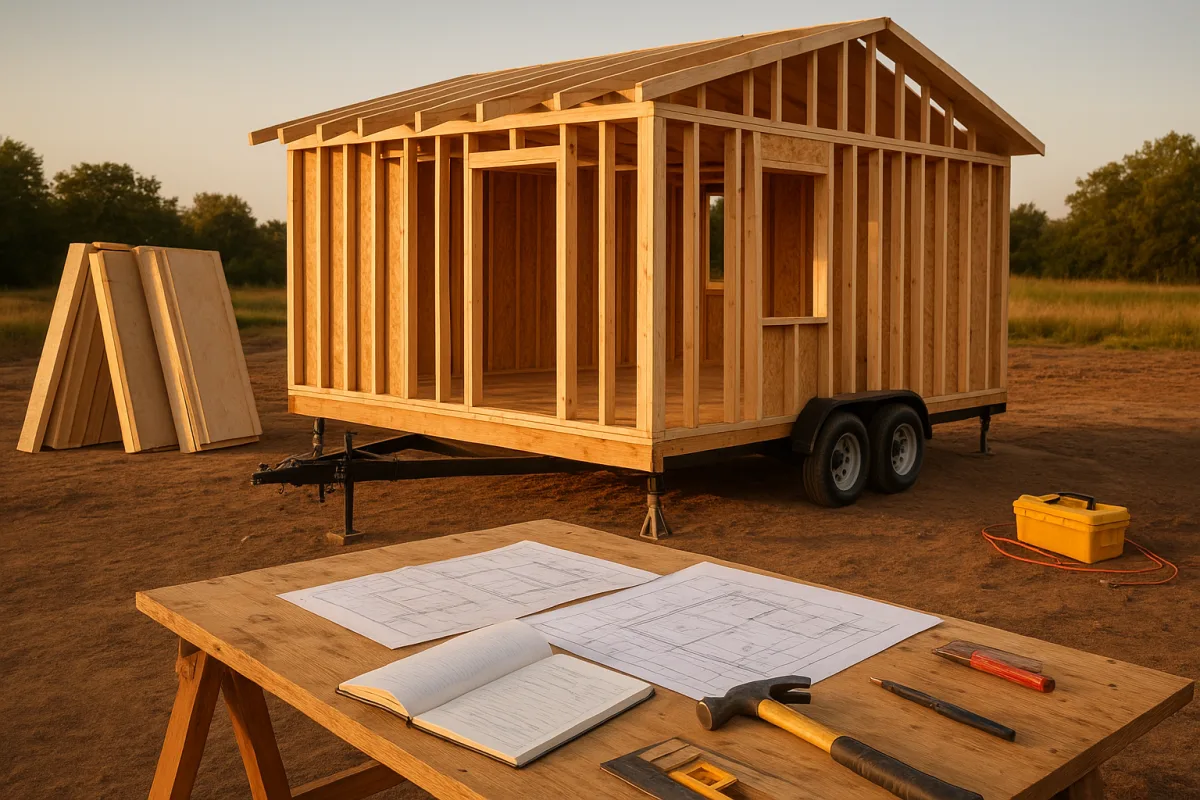
Tiny Home Build Costs Breakdown
Explore a detailed tiny home build costs breakdown, including site prep, financing, and budgeting tips for self-built tiny homes.
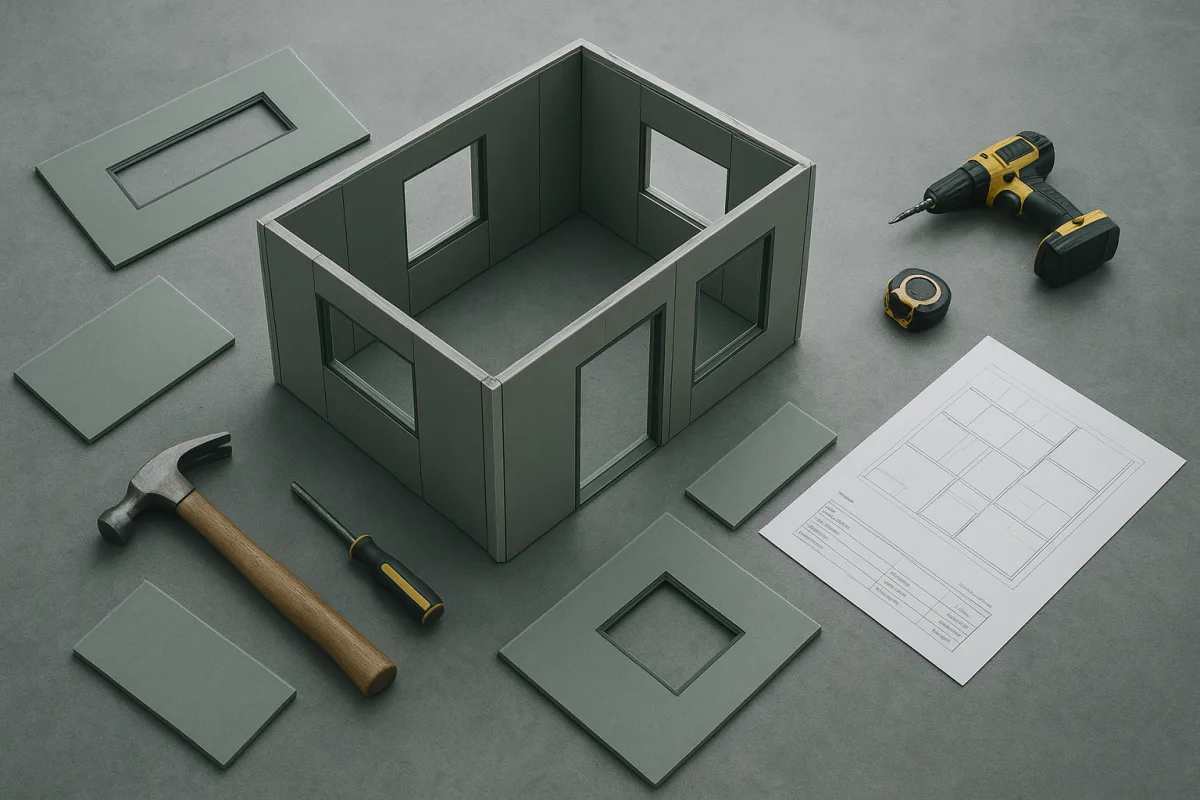
Prefab Tiny Home Kits Cost Breakdown and Features
Explore prefab tiny home kits cost breakdown under $100K, including features, installation, and financing challenges for buyers.