Legal Tiny Homes on Land: Affordable Living with Permits
Explore legal tiny homes on land, covering permits, zoning, affordability, and land access for sustainable small-space living.
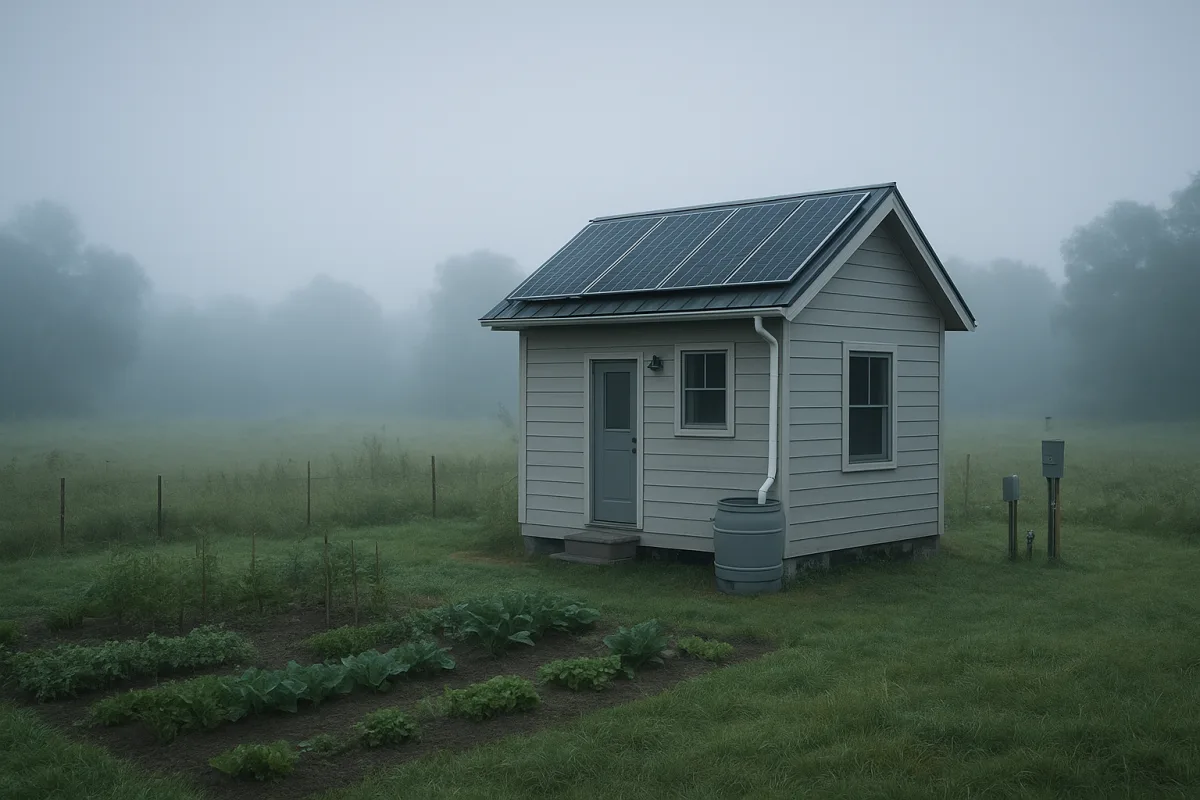
The shift is from tiny house as a movable object to tiny house as a legal housing project tied to land
The most useful tiny-home stories now are not really about squeezing a bed into a loft. They are about people reducing or eliminating rent by putting a small, code-compliant home on family land, land they own, or a site with predictable lot costs.
That is a meaningful shift, although the evidence for a nationwide boom in legal, rent-free tiny homes is still thinner than the online enthusiasm suggests. Tiny-house channels are showing more residents who have solved the land question first, or at least found a workable answer through family property, an established community, or a business. Meanwhile, the larger market is growing, with the global tiny-home market projected to reach $23.71 billion in 2026 and North America accounting for 54 percent of it. More than 30,000 prefab tiny homes are reportedly sold annually in North America. [7]
Those numbers do not tell us how many owners are living rent-free on their own land, and there is no solid Wisconsin-specific dataset for tiny homes on privately owned lots. Still, the pattern in recent tours is consistent: the financial win is usually not a magic-cheap house. It is access to land, existing utilities, and a legal path to occupy the site.
That distinction matters for anyone planning a project. A $40,000 or $70,000 tiny home can become an expensive mistake if it cannot be placed legally, connected to utilities, insured, or financed. Conversely, an imperfect shed conversion on a family property can become a genuinely powerful financial stepping stone if the permits, wastewater and ownership questions are handled properly.
The rent-free model is real, but land access is doing most of the work
A North Carolina creator profiled by Tiny House Giant Journey converted an unused family shed into a legal small home at age 21 after his apartment rent kept rising. The existing shed shell had cost his father $12,000, and the conversion, including materials, came to about $16,000. He reports monthly water, utilities and Wi-Fi bills of $262.
That headline cost is compelling, but the important part is what made it possible. The shed sat on multigenerational family land, and the property already had a septic system from earlier homes. He and his father also did much of the drywall, insulation, plumbing and electrical work themselves. In other words, this was not a $16,000 route from a vacant lot to a finished legal residence. It was a $16,000 conversion supported by land, an existing waste system, family labour and a usable building shell.
Crucially, the project was permitted. The resident told Tiny House Giant Journey that permits cost $500 before work began and that every stage required inspection. He specifically mentions installing GFCI receptacles to meet North Carolina requirements. That is the unglamorous part of the story, but it is what separates an informal backyard setup from a home someone can occupy with much less regulatory risk.
The broader research supports the point that there is no universal shed-to-home checklist. Local zoning may set minimum dwelling sizes of 600 to 1,000 square feet, excluding many tiny homes and conversions before the building department even reviews construction details. Building permits commonly run from $200 to $2,400, and approvals can take two to 12 weeks. Water, sewer or septic, electricity and gas may each need separate approvals. [1] [2] A shed that looks like a straightforward candidate can also trigger foundation engineering, setbacks, lot-coverage limits and fire-safety requirements.
This makes family land both an opportunity and a caution. It may remove rent, but it does not automatically confer clear ownership, permission from every interested party, or legal building rights. The Tiny House Giant Journey resident describes his family parcel as heirs property, an arrangement designed to keep it in the family. That history is meaningful, but anyone building on inherited or jointly held land should get the ownership, occupancy permission and succession plan in writing before spending heavily. A cheap build is not much security if a future dispute can force its removal.
“No rent” does not always mean “no housing cost”
The cleanest version of the trend is a small home on owned land with low fixed costs. But the available examples show several versions of that arrangement, and they should not be treated as identical.
A wedding-venue operator featured by Tiny Home Tours lives with her husband in a custom 8.5-by-36-foot tiny cottage on family-associated venue property. The couple does not pay conventional rent, and the cottage also supports the business: groomsmen can use its kitchen, bathroom and preparation areas before weddings, though guests do not stay overnight in the couple’s bedroom. That work connection helps offset costs and supported a creative financing arrangement.
It is a practical model, particularly for people already operating a farm stand, venue, campground or other land-based business. But it is not a universally transferable one. The cottage cost about $150,000 with upgrades, plus about $10,000 for the deck, according to its owner. That $160,000 figure includes the finished custom home and deck as described in the Tiny Home Tours profile, but it should not be read as a fully loaded property price. Land, utility work, site preparation, permitting and any business infrastructure can add substantially.
The home also illustrates how “tiny” can be made more livable by moving life outdoors. Its wraparound patio is about 40 by 8 feet, larger than the interior footprint. The owners chose a single-storey bedroom rather than a sleeping loft, gave the living room a 7.5-foot sofa, and used a portable cooktop and combination microwave-convection oven. Those are reasonable choices for a couple who spend significant time outside and can use separate workspace connected to the venue. They would be less convincing on a rainy suburban lot with no covered outdoor area and two people working from home at the kitchen counter.
A third Tiny Home Tours resident offers a useful contrast. A retired woman in Wisconsin bought a 10-foot-wide, 300-square-foot tiny home in the Tiny Timbers community for $145,000, paid cash using proceeds from selling her townhome, and reports no mortgage. Her $495 monthly lot rent includes garbage, sewage and recycling. She reports about $10 monthly gas use for her gas range and dryer, while electricity varies with use of her mini-split heating and cooling system.
This is not an owned-land, no-rent arrangement, but it shows why predictable site costs can still produce freedom. She moved away from roughly $500 monthly association dues and property taxes exceeding $400 per month at her former townhome. Her $495 lot rent is not trivial, but it bundles services and removes mortgage debt.
It is tempting to call that Wisconsin rent “average,” but the evidence does not support it. Available Wisconsin figures, mainly for mobile-home parks, put average lot rent around $390 a month. That is not the same as a tiny-home community or a private tiny-home site, and no reliable 2026 average exists specifically for tiny homes on owned land in the state. National tiny-home lot rents reportedly range from roughly $100 to more than $1,500 monthly. [8] The lesson is to price the exact site, not rely on a regional average.
Why this is happening now
Rent pressure is part of the answer, but the bigger factor is that people are getting more realistic about what tiny living requires. Earlier tiny-house media often treated mobility as the key benefit. In practice, a trailer can be easy to tow and still hard to park legally for full-time occupancy.
Local governments are slowly creating more routes for smaller permanent dwellings, particularly accessory dwelling units. Maryland’s HB 1466, for example, requires local authorization of ADUs, a category that can include some tiny homes. [1] That does not mean every county welcomes tiny homes, or that a home on wheels qualifies as an ADU. It does mean the policy conversation is moving beyond the old all-or-nothing question of whether a tiny house is “legal.”
At the same time, conventional housing costs have pushed more households to use land already available to them. A backyard, rural family acreage or underused business property can eliminate the largest recurring cost, provided the site is legal and the landowner relationship is stable.
The rise of compact all-electric equipment also makes these homes more workable. The Wisconsin resident’s mini-split, the North Carolina conversion’s modest heating setup and both Tiny Home Tours homes’ washer-dryer combinations show how small-scale systems fit limited square footage. The trade-off is that compact appliances are not always more durable or convenient. The Wisconsin resident reports being disappointed with a tightly sized Whirlpool refrigerator and says it was already the third refrigerator installed in the home. Tight appliance clearances can leave an owner with few replacement options.
What a cost-conscious planner should do differently
Start with the site, not the floor plan. Before ordering a shell, buying a shed or placing a deposit on a trailer, ask the planning department whether your parcel permits a primary small dwelling, an ADU, a manufactured home, an RV, or a tiny home on wheels as a full-time residence. Then ask about minimum size, setbacks, foundation type, driveway access, addresses, fire requirements, utility connections and septic capacity.
For an off-grid proposal, assume extra scrutiny rather than automatic savings. Solar, rainwater and alternative waste systems can lower ongoing utility bills, but they may require additional reviews and must satisfy local water, wastewater and electrical rules. [3] A grid-connected rural tiny home may see electricity around $30 to $80 monthly and water or sewer around $30 to $80, but insurance, maintenance and property taxes remain. [8] Off-grid power is not free after installation, either. Batteries, inverters, backup generation and system maintenance all need a budget.
Also budget for the costs that tours rarely lead with. A sensible allowance includes site work, foundation or anchoring, delivery, utility trenching, septic or sewer connection, permits, insurance and maintenance. Annual maintenance is commonly estimated at 1 to 2 percent of a home’s value. [9] On a $70,000 home, that is roughly $60 to $117 per month when spread across the year.
Financing deserves the same realism. Personal loans can cover roughly $5,000 to $100,000 but may carry 7 to 25 percent APR. RV loans often run 6 to 12 percent, but generally depend on an RVIA- or NOAH-certified home on wheels. Construction loans, HELOCs and USDA rural loans can be better fits for a permanent, code-compliant home on land, but documentation, credit and property classification matter. [4] [5] There is no established special financing category for shed conversions. Lenders tend to want code compliance, detailed plans and an asset they understand.
Finally, treat resale as a downside to manage, not a footnote. A tiny house on wheels can depreciate 40 to 60 percent over five years, while a foundation-based small home with land generally holds value better, though it is not guaranteed to appreciate. [6] The most durable financial strategy is often not buying the cheapest unit. It is building a modest, legal home on a site with clear title, approved utilities and a future use that makes sense even if you move on.
That is the grounded version of tiny-home freedom. Lower rent can change a household’s budget dramatically. But the house is only one line item. The lasting advantage comes from making the land, legality, utilities and ownership structure work together.
Frequently Asked Questions
How can I legally place a tiny home on my own land?
Legally placing a tiny home on your own land requires securing the proper permits and ensuring compliance with local zoning and building codes. This often includes obtaining building permits, meeting minimum dwelling size requirements, and passing inspections for utilities like water, sewer, and electricity. It is important to consult local authorities to understand specific requirements and avoid regulatory risks.
What permits are needed for tiny homes on private land?
Permits typically include building permits (costing from $200 to $2,400), zoning approvals, and separate permits for utilities such as water, sewer or septic systems, electricity, and gas. Additional approvals may be required for foundation engineering, setbacks, lot coverage, and fire safety. Approval times can range from two to twelve weeks depending on the jurisdiction.
How does land ownership affect tiny home affordability?
Owning land can significantly reduce housing costs by eliminating rent, but it does not guarantee low overall expenses. Access to existing utilities, legal permission to occupy the site, and handling permits properly are crucial to making a tiny home financially viable. Family land can provide opportunities for lower costs, but ownership and occupancy rights must be clearly established to avoid future disputes.
What are common zoning challenges for tiny homes on land?
Common zoning challenges include minimum dwelling size requirements (often between 600 and 1,000 square feet) that may exclude many tiny homes or shed conversions. Other challenges involve meeting setbacks, lot coverage limits, foundation requirements, and complying with fire safety regulations. Homeowners associations may also impose additional restrictions.
Can family land be used for legal tiny home living?
Yes, family land can be used for legal tiny home living if ownership, occupancy permissions, and succession plans are clearly documented. Projects on family land often benefit from existing utilities and infrastructure, but legal permission and proper permits remain essential. Without clear agreements, there is a risk of future disputes that could jeopardize the tiny home’s status.
Sources
No Mortgage, No HOA: She Pays $495 a Month in Wisconsin — Tiny Home Tours
At 21, He Quit Paying Rent & Turned a Shed into a Legal Tiny Home — Tiny House Giant Journey
No Loft, No Rent: Her Wedding Venue Tiny Home — Tiny Home Tours
Tiny House Zoning Laws: Where Tiny Homes Are Legal | Zonloty
Off-Grid Tiny House Legal Setup: Water, Waste, Power Permits
Tiny Home Financing — RV Loans, Personal Loans & Mortgage Options (2026)
Can You Get a Home Loan for a Tiny House? Loan Options - LegalClarity
How Much Does a Tiny House Cost? Affordable Options and Real Price Breakdowns | Shelter Insider
Watch Legal and Affordable Tiny Homes on Land on Youtube
Also from the sources
Related Articles
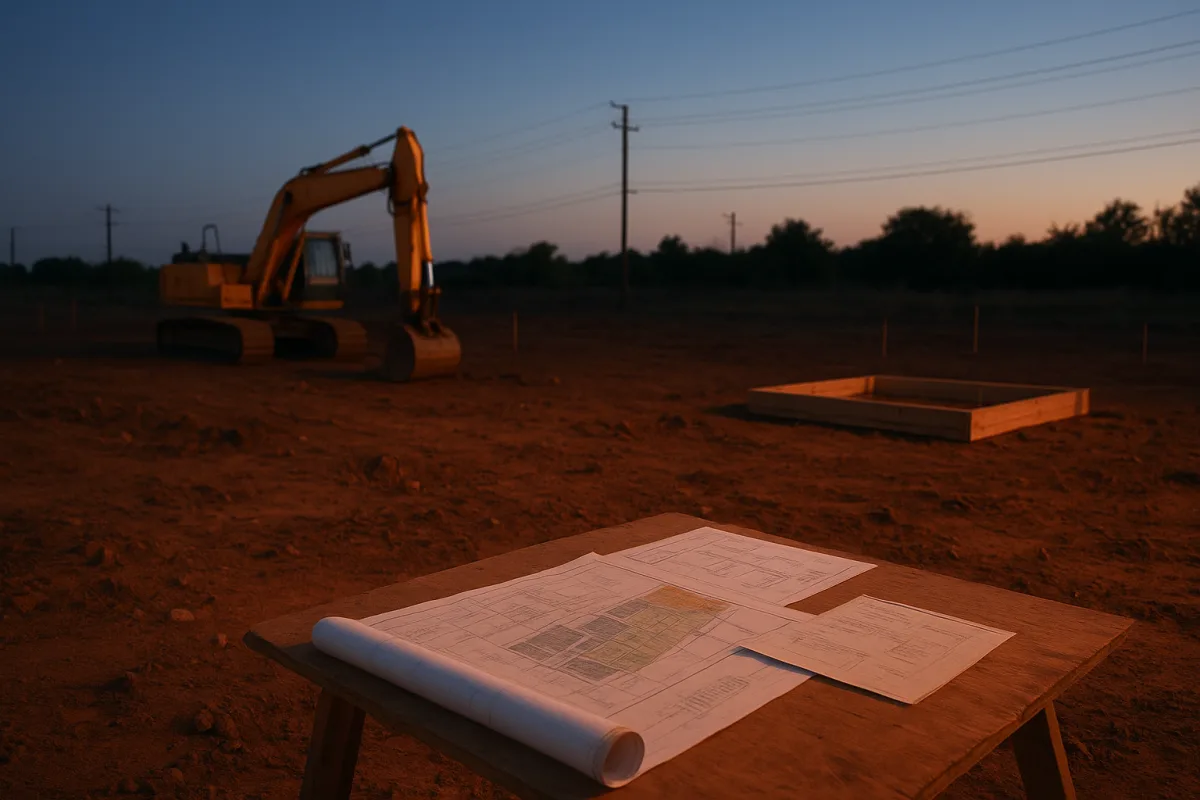
Building Tiny Homes on Raw Land: Challenges and Insights
Explore key challenges and insights for building tiny homes on raw land, including utilities, easements, permits, and budgeting site preparation.
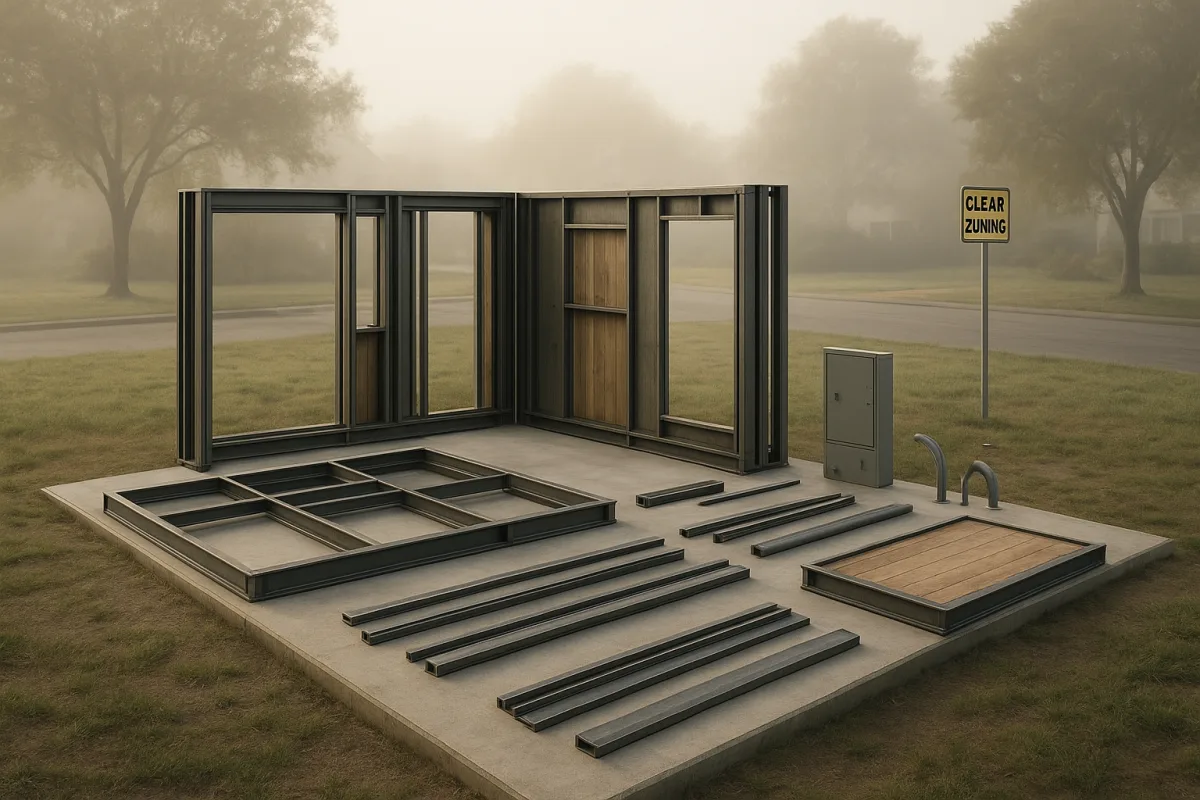
Affordable Prefab Tiny Homes Under 100K
Explore affordable prefab tiny homes under 100K with cost breakdowns, kit options, and legal considerations to help you choose the right small home.
Building Tiny Homes on Foundations
Learn about building tiny homes on foundations, including costs for site work, permits, and utilities to plan your land-based tiny house budget.
Prefab Backyard ADUs: Costs, Permits, and Installation Guide
Learn about prefab backyard ADUs, including costs, permits, installation, and financing to plan your small backyard housing project effectively.