Legal Land Use for Tiny Houses: What You Need to Know
Learn about legal land use for tiny houses, zoning rules, permitted communities, and how to confirm your tiny home's legal place to live.
Define what the move has to solve
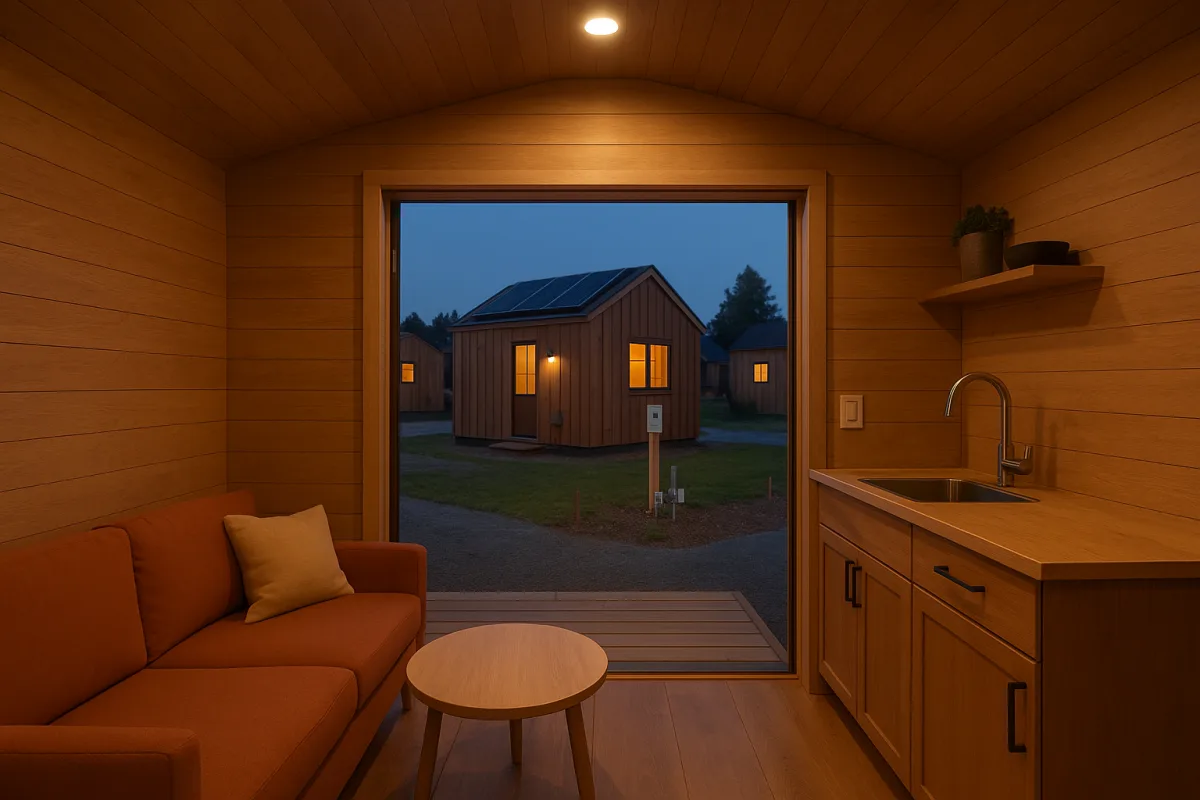
Before you search for acreage or tour a tiny house, write down why you are moving and what cannot change. Your answer may be lower housing costs, proximity to family, a one-level home, a quieter setting, or less maintenance.
Tiny Home Tours host Cindy, who downsized with her husband from a 2,400-square-foot house to one just under 400 square feet, frames this as finding your “why.” Their reason was affordability after retirement, but your reason should set the limits on location, budget, storage, and household size.
Then make a short list of nonnegotiables: distance to work, hospitals, grocery stores, schools, reliable internet, parking, pets, and accessibility. Cheap rural land can become expensive living if every errand is a long drive.
This is also where you decide whether you need a permanent residence or a flexible seasonal base. A tiny house on wheels, often called a THOW, is frequently regulated as an RV, which can sharply limit year-round residential use. [2][3]
Choose the kind of home the site will permit
Your home format and your parking plan are tied together. A foundation-built small house is generally easier to permit as a residence, while a THOW can be easier to move but may be barred from permanent occupancy. [3][8]
Many jurisdictions still set minimum dwelling sizes between 600 and more than 1,000 square feet. That excludes many 200-square-foot THOWs, even if the house has a full kitchen, bathroom, and utility hookups. [3]
An accessory dwelling unit, or ADU, can be a better route if you want to live near relatives or in an established neighborhood. It is a smaller home on the same property as a primary residence, but it still requires the local rules to allow it.
Rules are moving in some places. Arkansas legislation passed in 2025 allows ADUs without permits and bars restrictive design and occupancy rules, while cities including San Diego, Riverside, San José, and Fresno allow THOWs as ADUs under their local programs. [2][4][5]
Do not assume a statewide headline covers your parcel. Ask the city or county whether your exact address can hold an ADU, whether it can be occupied full-time, and whether a wheeled unit is accepted.
Rank your places to live before shopping for land
For most buyers, Tiny House Talk ranks planned tiny-home communities, small-home villages, and pocket neighborhoods among the strongest legal options. The developer has usually completed the zoning work before residents arrive.
Cottages on Vaughn in Clarkston, Georgia, is one example of the pocket-neighborhood model. The MicroLife Institute developed eight cottages of 250 to 550 square feet on a half-acre site with the city, arranged around shared green space.
A permitted community is not automatically cheap, but it gives you a defined address, utility connections, and established occupancy rules. Estimated 2026 tiny-home lot rent runs about $300 to $600 monthly in rural areas, $500 to $900 in suburbs, and $900 to $1,500 or more in urban locations. [1]
Ask whether water, sewer, trash, internet, lawn care, parking, and shared amenities are included. Community or HOA fees commonly run from $100 to $500 a month, while separate tiny-home utilities average roughly $140 to $380 monthly. [10][11]
Tiny House Talk’s profile of Birches Creek Village in East Texas shows what to verify at a newer community. It has 16 RV sites and nine sites for THOWs and cottages, with septic, water, 50/30/20-amp electric service, and fiber internet at each site.
Birches Creek Village has not published ongoing lot-rent or utility pricing. Treat its full hookups and amenities as features to price directly with management, not a reason to assume it matches average community costs.
Compare an RV park, a backyard, and private land honestly
RV parks are often the quickest legal landing spot for a THOW because park rules already accommodate RVs and park models. Monthly rates can be far cheaper per night than short stays, but many parks restrict long-term residency or impose age, appearance, and certification standards.
A backyard arrangement can work when the local government allows a temporary dwelling, rural RV use, or an ADU. It can also put you in a fragile position if the arrangement relies on a friendly landowner instead of a permit.
Tiny House Talk warns that a neighbor complaint can send a code-enforcement notice to the owner, leaving you to move on short notice. Full-time RV or THOW living on residential private land is prohibited in many areas, even with the owner’s permission.
Caretaker housing can be another path, especially at a farm, campground, or rural property where zoning allows an on-site employee dwelling. Get the occupancy arrangement, work expectations, utilities, rent, notice period, and towing access in a written agreement.
We would skip any private-land plan that begins with “nobody will notice.” Fines, violation notices, utility disconnection, and forced relocation are common outcomes when a tiny home does not meet local code. [8]
Call the zoning office before you spend money
Call or email the planning and zoning department with the parcel number or street address. Do this before you buy a house, sign for land, or pay a deposit to reserve a community site.
Describe the unit accurately. State whether it is on a permanent foundation, built to a residential code, certified as an RV, registered as a vehicle, or intended as an ADU. Calling every small dwelling a “tiny home” can produce vague answers.
Ask five direct questions: Is it a permitted full-time residence? What zoning district allows it? Are wheels allowed? What permits are required? Can water, sewer or septic, and electric service be legally connected?
Also ask about setbacks, lot coverage, driveway standards, fire access, parking, and floodplain restrictions. Permit denials often stem from minimum-size rules, RV classification, inadequate utility infrastructure, setbacks, lot coverage, and difficult conditional-use or variance processes. [8]
Request the answer in an email, then save it with the parcel listing and any permit documents. A verbal “you should be fine” does not protect you if a new staff member reads the ordinance differently.
Check the land beyond the word unrestricted
“Unrestricted” land can mean there is little county zoning. It does not mean you can ignore building codes, septic rules, well rules, road access, covenants, flood restrictions, or state health requirements.
Tiny House Talk’s land-buying guidance makes a good point: affordable unrestricted acreage may be far from hospitals, pharmacies, groceries, work, and dependable internet. Consider whether you can keep making those drives in ten or fifteen years.
Private covenants can be stricter than county zoning. Ask for the recorded covenants, conditions, and restrictions, then read them for minimum house size, foundation requirements, RV bans, exterior rules, rental restrictions, and time limits for construction.
If you want rural independence, price a developed site against raw land. In 2026, a rural lot purchase plus a build on developed land is estimated at $80,000 to $150,000, but conditions vary greatly by region and parcel. [1]
Price the site work before comparing homes
The builder’s sticker price is only part of your housing cost. Delivery, foundation or pad work, skirting, utility trenching, septic, water service, electric service, permits, and driveway work can change the decision completely.
Tiny Home Tours reported that Cindy and Joe paid $109,000 for their home installed on its site, including skirting and hookups. Cindy said moving a home can cost $10,000 or more depending on distance, and utility connections can add roughly $25,000 to $30,000.
Those figures describe one household’s experience, not a universal installed price. Still, they show why a lower-priced house on undeveloped land can cost more overall than a higher-priced unit already accepted in a serviced community.
Separate your budget into three columns: house purchase, one-time site costs, and monthly living costs. Include an emergency reserve for delayed permits, extra trenching, a larger electric service, hauling, and the possibility that you need to move.
Read the community agreement like a housing contract
A community may be the cleanest route to legality, but you do not own the land beneath your home. Ask for the full lease, rules, fee schedule, and occupancy standards before you commit to a build.
Confirm that full-time, year-round living is permitted. Ask which homes qualify, whether RVIA or NOAH certification is required, the age and size limits, exterior finish rules, pet rules, guest parking, and who approves deliveries.
Ask how much lot rent has increased in recent years and how much notice management must give before an increase. Tiny House Talk also recommends checking how long the community has operated and whether it has county permits.
Tiny Home Tours’ Cindy reported paying $892 monthly lot rent at her community, including water, trash, lawn maintenance, a carport, shed, dog park, garden area, pool, hot tub, game room, workout room, and clubhouse. Her household’s electricity was about $90 monthly.
That arrangement reduced her reported monthly housing cost to about $1,065, including insurance, compared with about $2,500 monthly at her former conventional home. Your result depends on debt, rent increases, local utility rates, and which services your lease includes.
Match financing to the house and land
Do not count on a conventional mortgage for a THOW. Lenders commonly view it as an RV or movable personal property, so financing is usually through RV loans, chattel loans, personal loans, or builder financing. [1]
RV loans typically run seven to 15 years with reported interest rates around 7 to 15 percent, and may require RVIA or NOAH certification. Chattel loans commonly cover $25,000 to $150,000 over five to 20 years, often at 7 to 14 percent. [1]
Personal loans may cover about $30,000 to $100,000 over three to 10 years, with reported rates around 6 to 12 percent. Lenders commonly review income, placement on owned or leased land, credit around 620 or higher, and down payments from zero to 20 percent. [1]
USDA Rural Development financing can be attractive in eligible rural areas, but the reported path requires a permanent foundation and a home of at least 400 square feet. It is not a general solution for a 200-square-foot THOW. [1]
Get loan quotes after you have confirmed the home type and location. A lender may approve the house but decline the arrangement once it learns the home sits in an RV park, on informal family land, or on an unpermitted site.
Keep a backup plan before move-in
Even a legal placement can change if a lease ends, a park is sold, a local rule is revised, or your needs change. Before delivery, confirm that the house can leave the site and that the access road, gate, turning radius, and utility disconnection process allow it.
Keep copies of the title or registration, certification documents, insurance records, lease, permits, utility agreements, tow plan, and builder specifications. You will need them for financing, inspections, resale, insurance questions, and a move.
If you want the lowest-risk route, we would choose a permitted community or a fully permitted ADU before buying raw land. You can still pursue land later, but you will be making that larger investment with a working housing plan behind you.
Frequently Asked Questions
How do I confirm legal land use for my tiny house?
You should contact the city or county planning department where the land is located to verify zoning rules, utility requirements, and your right to occupy the site. Get all approvals and permissions in writing before purchasing land or moving a tiny house there. This helps avoid costly fines or forced moves.
What types of land are permitted for tiny house placement?
Permitted tiny-home communities, legal accessory dwelling units (ADUs), and RV parks that allow long-term stays are generally the safest options. Private land without permits is risky because many areas prohibit full-time tiny house living, even with the landowner’s permission. Rural or agricultural properties might allow caretaker housing if zoning permits.
Can I live full-time in a tiny house on wheels legally?
Full-time residence in a tiny house on wheels (THOW) is often restricted because many jurisdictions classify them as RVs and set minimum dwelling sizes above typical THOW square footage. Some cities permit THOWs as ADUs under local programs, but this varies widely, so local confirmation is essential.
What are the risks of parking a tiny house on private land without permits?
Parking without permits can lead to code enforcement actions, fines, and eviction notices, often triggered by neighbor complaints. Without formal agreements and permits, you may have to move on short notice and face legal penalties, making this option the highest risk.
How do accessory dwelling unit laws affect tiny house placement?
ADU laws can allow a tiny house on the same property as a primary residence if local rules permit it. Some states like Arkansas have removed permit requirements for ADUs and barred restrictive rules, while certain California cities allow THOWs as ADUs. However, these laws vary by location, so you must confirm local ADU regulations before planning placement.
How we researched this
This article was assembled from 1 video source, 3 published articles, 11 cited references.
Nothing here is based on hands-on testing. Where a figure or finding appears, it belongs to the source cited beside it, and the writing says so rather than implying otherwise. Every source is listed below so you can check it.
Sources
Live Q & A - I Want to Go Tiny, but I’m Stuck, Tiny Home Tours
Where to Park or Build a Tiny House: Your Options, Ranked, Tiny House Talk
Dezeen's favourite furniture and homeware from October, Dezeen
Birches Creek Village: A Quiet RV and Tiny Home Community in the East Texas Woods, Tiny House Talk
Tiny Home Cost In 2026: The Full Breakdown, Not Just The Sticker, PERCH
Which States Allow Tiny Homes on Foundations or Wheels - LegalClarity
Tiny House Zoning Laws: Where Tiny Homes Are Legal | Zonloty
Tiny Homes Zoning, Tiny Home & ADU Zoning Laws by State (All 50 States)
SBA Loan Rules Just Changed: Here's What Could Sink Your Application in 2026
Watch Legal and Practical Land Use for Tiny Houses on Youtube
Related Articles
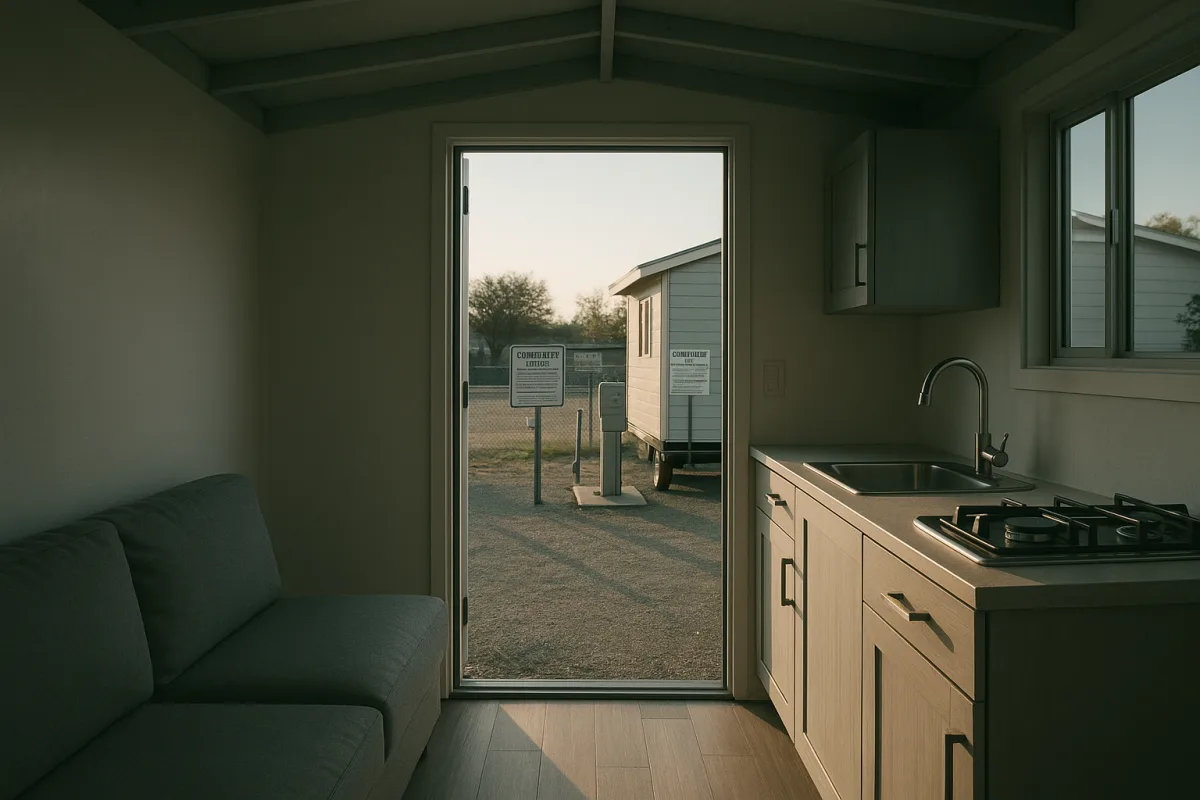
Tiny House Land Use Options and Community Living Rules
Explore tiny house land use options, community living rules, and legal classifications to find where you can legally place and live in a tiny house.
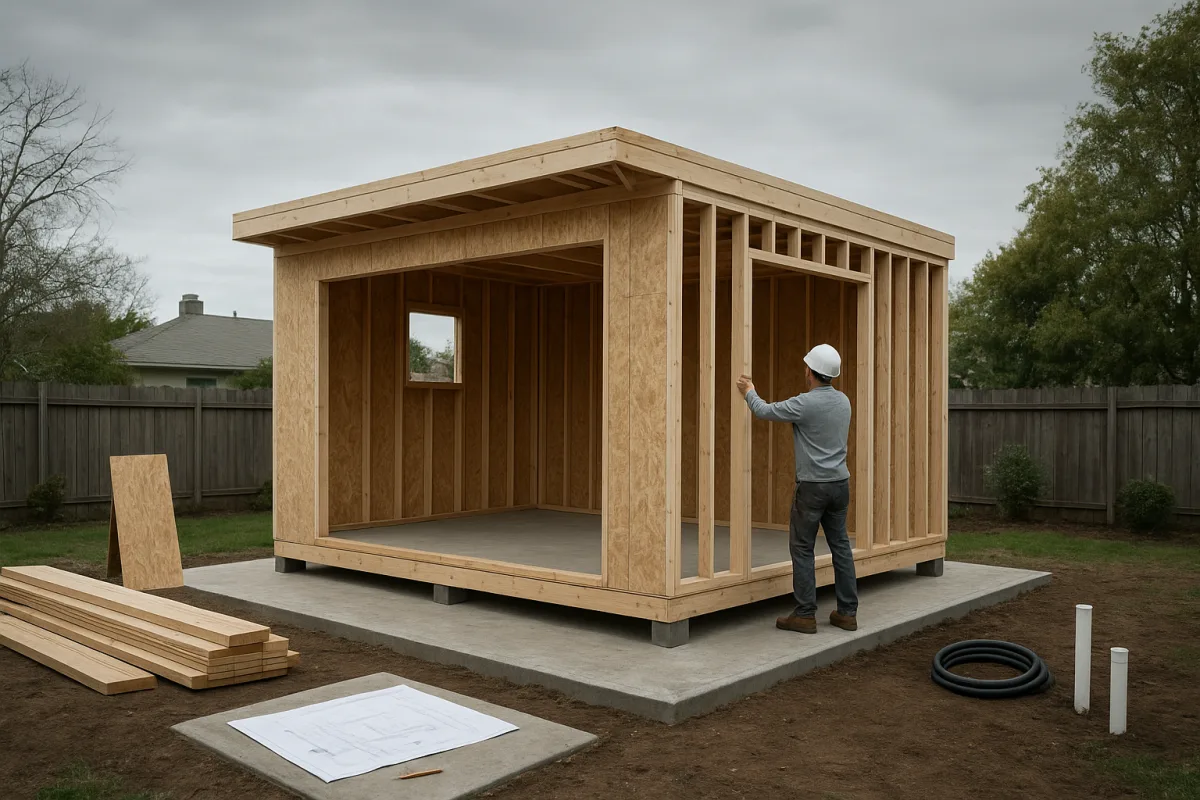
Prefab Backyard ADUs: Costs, Permits, and Installation Guide
Learn about prefab backyard ADUs, including costs, permits, installation, and financing to plan your small backyard housing project effectively.
Legal Tiny Homes on Land: Affordable Living with Permits
Explore legal tiny homes on land, covering permits, zoning, affordability, and land access for sustainable small-space living.
Downsizing to Tiny Homes in Communities
Explore downsizing to tiny homes in communities, covering costs, challenges, storage, and lifestyle changes for small-space living.