
Prefab Modular Tiny Homes Compared
Compare prefab modular tiny homes with innovative layouts like Samara XL8 and Wind River Nova to find the best fit for your living needs.
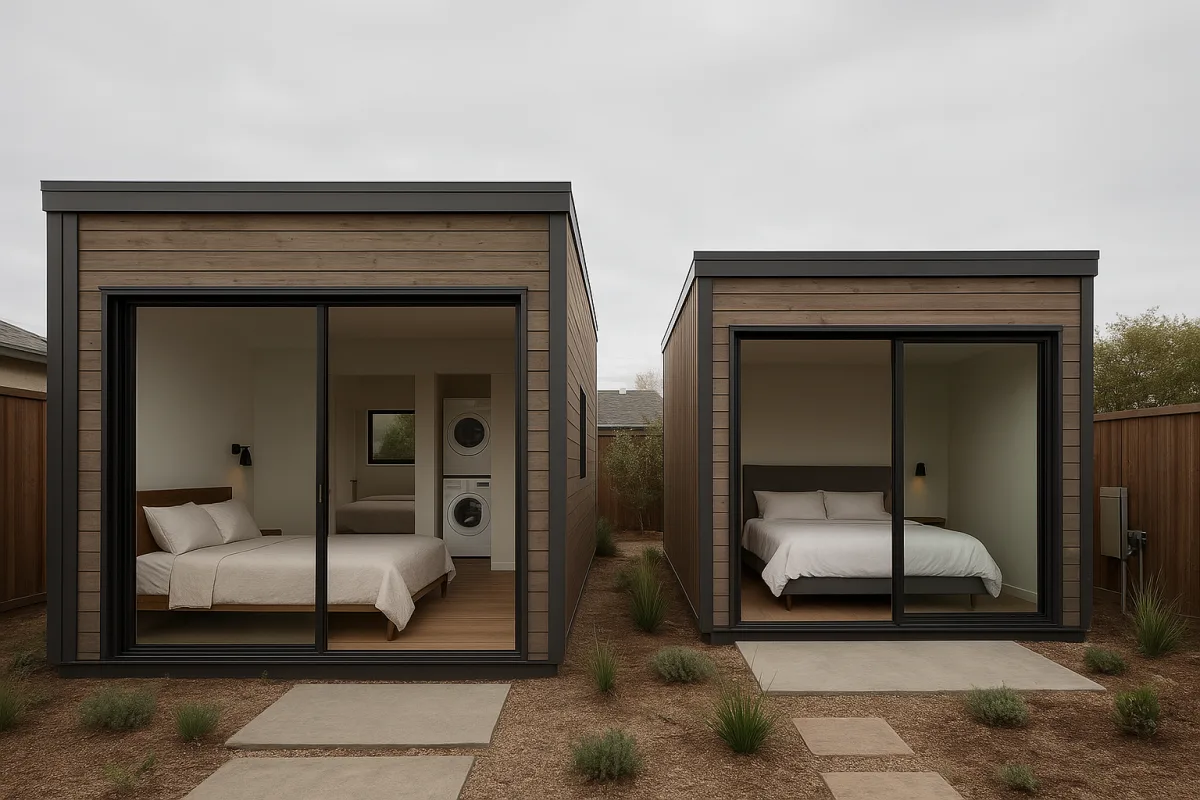
Prefab Layouts Compared: Samara XL8 vs. Wind River Built Nova
The decision: more rooms or a better small room
You are deciding between two very different versions of prefab living. Samara’s XL8 is an 800-square-foot, two-bedroom backyard home intended to function as a complete ADU. Wind River Built’s Nova is a 286-square-foot studio modular aimed at compact living, guest use, and hospitality.
They are not direct price rivals. The XL8 has nearly three times the stated floor area, two additional private rooms, and a second bathroom. Still, both show how prefab builders are moving beyond the familiar narrow tiny-house-on-wheels layout.
Our pick is the XL8 if this will be your home, a long-term family ADU, or housing for adult relatives. The Nova is close only if you genuinely need a studio, not a smaller house.
At a glance
| Criteria | Samara XL8 | Wind River Built Nova |
|---|---|---|
| Layout and floor area | 800 square feet, two bedrooms, two bathrooms, living room, kitchen, laundry [Kerry Tarnow] | 286-square-foot studio, with bed and living area at the front, kitchenette in the middle, bathroom at the rear [Kerry Tarnow] |
| Daily living and storage | Separate living room, dining area, built-in bedroom wardrobes and dressers, pantry or linen storage, dedicated laundry storage [Kerry Tarnow] | Built-in king bed, bedside storage, shelves, drawers, kitchen storage, and bathroom shelving, but no separate bedroom or laundry [Kerry Tarnow] |
| Privacy and bathing | Two enclosed bedrooms, a hall bathroom with tub-shower, and a primary bathroom with walk-in shower [Kerry Tarnow] | One open sleeping space and one bathroom with a tiled shower, floating vanity, and wall-mounted toilet [Kerry Tarnow] |
| Construction and exterior | Steel frame, fiber-cement siding, standing-seam metal roof, and a Class A fire rating [Kerry Tarnow] | Thermally modified Lunawood exterior cladding, cedar accents, standing-seam metal roof, and a mini-split [Kerry Tarnow] |
| Starting price | $249,000 for the base unit in California, plus installation and site-specific costs [[2]](https://www.evoadu.com/insights/prefab-adu-price-comparison-california/ "Prefab ADU Prices in California (2026): EVO vs Abodu vs Samara | EVO ADU") |
| Best fit | Full-time ADU, multigenerational living, downsizers wanting conventional rooms | Guest suite, premium rental, retreat, or one resident who values finish quality over separation |
| Main drawback | A high entry price before delivery, foundation, utilities, and permits | Studio living asks you to sleep, lounge, and host in one shared room |
Layout and floor area
The XL8 uses a familiar small-house sequence: living room and kitchen at the front, then a central hall with laundry, then bedrooms and bathrooms toward the rear. It is an ordinary arrangement, and that is its strength.
You can shut a bedroom door, run the washer, cook dinner, and leave the living room usable. For parents, roommates, or visiting family, those separations are far more valuable than another design flourish.
Kerry Tarnow’s walk-through of the Samara XL8 shows a vaulted living area with front doors and side windows, then a dropped hall ceiling that accommodates ductwork. That is a sensible compromise, keeping the shared room visually open while fitting mechanical systems overhead.
The Nova takes the opposite route. Wind River Built places a built-in king bed and lounge area against the large front glazing, puts a compact kitchenette in the center, and closes the bathroom at the far end.
That can be a lovely place to wake up if your site has a view. It also means the bed remains the visual center of the home all day, whether you are working, eating, watching television, or hosting someone.
For a single resident, the Nova’s one-room plan can feel intentional rather than cramped. For a couple working different schedules, its lack of a separate bedroom is where the design falls down.
Daily living and storage
Samara puts a surprising amount of attention into the unglamorous parts of living. The XL8 has a coat closet, a second built-in cabinet that can become pantry or linen storage, and a dedicated laundry zone with stacked washer-dryer space, folding counter, cabinets, shelves, and hanging storage. [Kerry Tarnow]
The kitchen is also built for regular use, not occasional vacation cooking. It has a refrigerator, electric range, dishwasher, 29-inch sink, drawers, upper cabinets, pull-out cabinet storage, and designated garbage storage. [Kerry Tarnow]
Both XL8 bedrooms have matching built-in drawer storage, open shelving, and wardrobes made through Samara’s cabinet shop. You may still need to reduce what you own, but you are not forced to use the living room as your dresser.
The Nova earns credit for making a studio feel finished. Its king bed is built in, with storage on both sides, while the kitchenette includes drawers, a refrigerator, quartz counters and backsplash, shelving, and a concealed hot-water tank. [Kerry Tarnow]
Wind River Built also uses its in-house cabinet shop for the Nova’s custom cabinetry. Details including recessed lighting, warm wood finishes, tile, and a full-length ceiling beam help it feel closer to a boutique cabin than a basic park-model interior.
Still, storage does not create rooms. The Nova can hold a carefully edited wardrobe and kitchen setup, but it does not give you a place to hide laundry, close off a messy bed, or work behind a door.
Privacy and bathing
Both homes avoid a common tiny-home frustration: making residents choose between a usable bathroom and usable circulation space. The XL8 has two bathrooms, with a tub-shower in the hall bath and a walk-in shower in the primary bath. [Kerry Tarnow]
That arrangement makes the XL8 workable for aging parents, a small family, or a rental shared by two adults. The second bathroom also reduces pressure on mornings, an issue that makes many small homes feel smaller than their square footage suggests.
The Nova’s bathroom is much more polished than its footprint suggests. It includes tile flooring, a tiled shower, rainfall fixture, floating vanity, shelf storage, and a wall-mounted dual-flush toilet. [Kerry Tarnow]
A particularly thoughtful detail is the shower control placed where you can set the temperature before stepping under the water. It is a small comfort, but it shows where the Nova spends its budget.
The trade-off is privacy outside the bathroom. The Nova gives you one enclosed room, while the XL8 gives each resident somewhere to retreat. For full-time cohabitation, we would take the XL8 every time.
Construction and site demands
The XL8 is delivered in two sections and assembled on site. Its steel frame, fiber-cement siding, tucked eaves, and standing-seam roof contribute to the stated Class A fire rating, a meaningful feature for California buyers concerned about wildfire exposure. [Kerry Tarnow]
Samara offers some flexibility in the front opening arrangement, allowing the double doors shown in the tour to be replaced with windows. That is useful if you want more wall space inside or do not need a second exterior entrance.
The Nova is smaller but not stripped down. Its exterior combines thermally modified Lunawood cladding, cedar details, dark window trim, and a standing-seam metal roof, while a mini-split handles heating and cooling. [Kerry Tarnow]
Neither build lets you skip site work. A prefab unit can shorten construction, but you still need an approved location, delivery access, foundation or support design, utility connections, inspections, and permits appropriate to your jurisdiction.
Those hurdles remain substantial. Realtor.com reporting summarized by The Foldable Home Store found that only about 17% of U.S. land permits manufactured or modular homes outright, even as some jurisdictions create preapproved plans and states pursue limited zoning reforms. [3]
The price gap is real, and so are the missing costs
Kerry Tarnow reports that the XL8 starts at $249,000 plus installation. Samara’s 2026 California base price is also listed at $249,000 for the unit alone, with no standardized move-in-ready total published. [2]
That price excludes the costs most likely to vary by property: delivery, installation, foundation, utility runs, permits, and site preparation. Other California prefab ADUs are estimated around $189,540 to $298,800 total, but those projects are not direct XL8 equivalents. [2]
Kerry Tarnow reports a $115,000 starting price for the Nova. The tour does not establish whether that figure includes delivery, installation, furnishings, foundations, utility connections, or permitting, so get a written scope before comparing it with a finished ADU quote.
At face value, the Nova costs less than half as much as the XL8. On a per-square-foot basis, though, its smaller footprint and high-end interior mean it is not a budget studio in the usual sense.
Where expandable containers and Quonset kits fit
If the XL8 and Nova are beyond your budget, expandable container homes are the tempting alternative. They arrive folded, often in a shipping-container-sized transport form, then unfold into a wider living space on site.
The lowest advertised prices can be misleading. Prefab Homes and Tiny House reports that Reach Top’s 20-foot expandable model begins around $7,250 FOB, while its 40-foot version is roughly $10,650 FOB. FOB means the price applies at the factory dock in China, not at your property.
Ocean freight, import duties, domestic trucking, foundations, utility work, permits, and climate-appropriate insulation can erase much of that apparent bargain. The same channel places a U.S.-facing alternative, Express Container Homes’ 40-foot expandable, at about $24,500 before location-specific delivery and options.
Boxabl’s Casita sits at the more established end of the expandable market. It has been marketed around $50,000 to $60,000 for the unit, but it is still not a complete land-and-installation price. [4]
Financing can be another obstacle for inexpensive container-style homes. Lenders may require plans, income verification, appraisals, and a certificate of occupancy, while some loan minimums exceed the cost of the unit itself. [5]
Quonset kits are another route for buyers with land, building skills, and patience. SteelMaster lists its basic cabin and tiny-home shell from $4,424, but that includes steel arches, hardware, blueprints, and instructions, not a finished house. [8]
A Quonset’s clear-span interior can offer much more layout freedom than a standard eight-foot-wide container. Typical small versions range from roughly 168 to 440 usable square feet, though curved walls complicate cabinets, shelving, and furniture placement. [7]
We would choose an S- or A-shaped Quonset over a round Q model for a home, because straight sidewalls make daily furnishing easier. The low shell price is attractive, but insulation, vapor control, end walls, doors, plumbing, electrical work, and concrete are not optional.
There is no solid direct comparison of Quonset, container, and tiny-home utility or maintenance costs. Traditional tiny homes are estimated to run roughly $140 to $380 per month in utilities, but insulation quality and local climate will drive your result. [10]
Who each option suits
The Samara XL8 suits you if this needs to behave like a real small house, not a stylish room. We would pick it for a couple with a child, an aging parent, two long-term renters, or a homeowner building a serious backyard ADU in California.
It also suits downsizers who want fewer square feet without giving up a guest room, laundry, two bathrooms, or the ability to close a door. Its weak point is cost, because $249,000 is only the base unit before property-specific expenses. [2]
The Wind River Built Nova suits you if one flexible studio is enough. It makes sense as a high-finish guest house, a glamping or short-term rental unit, a weekend cabin, or a primary home for one person who wants a king bed and does not need separation.
We would skip the Nova for a household that needs a work-from-home room, regular overnight guests, children, or separate sleep schedules. Its finishes are strong, and its layout is honest, but 286 square feet remains one room with a bathroom attached.
Expandable containers suit buyers who can verify the supplier, budget beyond the factory quote, and secure local approval before ordering. A low sticker price may buy a shell, not a legal, insulated, connected home.
Quonset kits suit hands-on owners with land and a clear construction plan. They can provide open space for less than a finished modular home, but they shift responsibility for the hard parts, from foundation through final inspection, onto you.
Frequently Asked Questions
What are the differences between prefab modular tiny homes like Samara XL8 and Wind River Built Nova?
The Samara XL8 is an 800-square-foot, two-bedroom, two-bathroom home with a separate living room, kitchen, laundry, and storage areas, designed for full-time living by two to four people. In contrast, the Wind River Built Nova is a 286-square-foot studio with a built-in king bed, kitchenette, and bathroom in one open space, suited for a single resident or guest use. The XL8 offers more privacy and storage, while the Nova emphasizes a compact footprint and polished finishes.
Which prefab modular tiny home layout is best for full-time living?
The Samara XL8 is better suited for full-time living, especially for families or multigenerational households, because it provides separate bedrooms, two bathrooms, laundry facilities, and ample storage. Its layout supports daily living needs and privacy more effectively than a studio design like the Wind River Built Nova, which is more appropriate for short-term stays or single occupants.
How do prefab modular tiny homes compare in price and features?
The Samara XL8 starts at about $249,000 for the base unit before delivery, installation, and site-specific costs, reflecting its larger size and additional rooms. The Wind River Built Nova begins around $115,000 but is much smaller and simpler. Neither price includes permits, foundations, or utilities, which vary by location. The XL8 offers more conventional home features, while the Nova focuses on compact luxury and design.
What are the benefits of modular tiny homes with innovative layouts?
Modular tiny homes like the Samara XL8 and Wind River Built Nova move beyond traditional tiny-house-on-wheels designs by offering more functional living spaces or refined studio layouts. The XL8’s layout supports everyday living with separate rooms and storage, while the Nova’s design maximizes a small footprint with built-in furniture and high-end finishes. These innovations help address privacy, storage, and lifestyle needs in small-scale housing.
What should I consider before buying a prefab modular tiny home?
It is important to check local zoning regulations, as about 83% of U.S. land restricts manufactured or modular housing, which can affect where you can place a prefab home. Additionally, you should factor in costs beyond the base price, including delivery, site work, utilities, foundation, permits, and potential delays in approvals. Understanding your living needs, such as the number of residents and privacy requirements, will also guide your choice of layout.
How we researched this
This article was assembled from 4 video sources across 2 channels, 10 cited references.
Nothing here is based on hands-on testing. Where a figure or finding appears, it belongs to the source cited beside it, and the writing says so rather than implying otherwise. Every source is listed below so you can check it.
Sources
Inside New Prefab Home with a Layout that Just Makes Sense!, Kerry Tarnow
Inside the Brand New Prefab Home with Features I Was NOT Expecting!, Kerry Tarnow
Forget Container Homes, Quonset Kits Start at $4,424 (Full Prices vs Tiny Houses), Prefab Homes and Tiny House
10 Cheapest Expandable Prefab Container Homes You Can Buy Right Now, Prefab Homes and Tiny House
Prefab ADU Prices in California (2026): EVO vs Abodu vs Samara | EVO ADU
Prefab Tiny Homes: The Independent Buyer's Guide for 2026 | PrefabMarket
How to Finance a Container Home in 2026 (What Actually Works)
Tiny Home Cost in 2026: What You'll Really Pay to Build or Buy | Shelter Insider
Shop Quonset Cabins & Tiny Homes | Durable Steel Living Spaces
Container Home Designs & Layout Ideas (2026) | ContainerCompass
Watch Prefab and Modular Tiny Homes with Innovative Layouts on Youtube
Also from the sources
Related Articles
Innovative Small Homes with Flexible Design
Explore innovative small homes with flexible design through a detailed comparison of Barcelona and Milan apartments for adaptable living.
Modern Modular Tiny Home Designs
Explore modern modular tiny home designs, including layouts, costs, financing, and cold-climate considerations for compact, factory-built homes.
Two-Bedroom Tiny Homes: Family-Friendly Small House Options
Explore two-bedroom tiny homes with family-friendly layouts, pricing, and design tips for practical small-space living.
Park Model Tiny Homes Comparison
Compare park model tiny homes Durango and Outpost by price, layout, and unique features to find the best fit for your small-space living needs.