Tiny Home Financing Options: Loans and Market Insights
Explore tiny home financing options, loan types, certification impact, and market insights to help you buy your tiny house smartly.
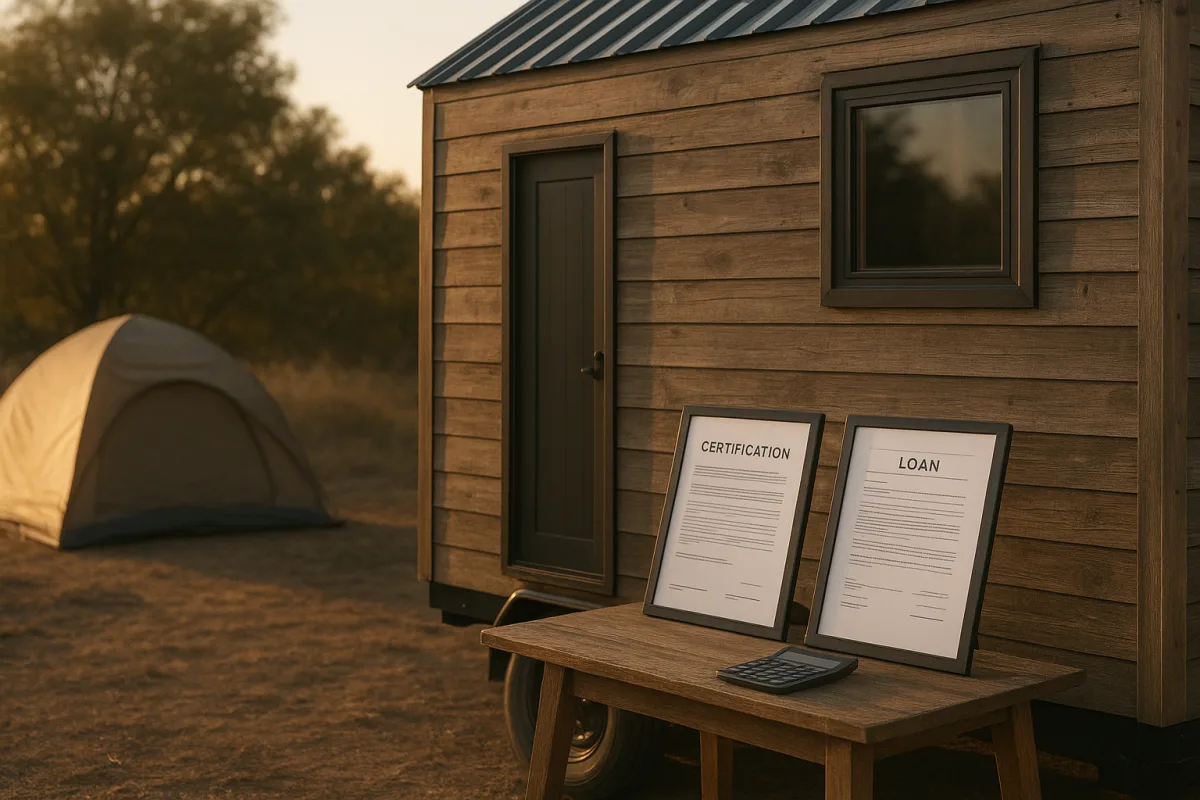
Financing a Tiny Home Starts With One Question: What Is It Legally?
Certification is the gatekeeper
The most important financing distinction is not whether a tiny home has a loft, a composting toilet, or cedar siding. It is whether somebody outside the builder can identify what the structure is.
That is what certification does. It gives a lender, insurer, park owner, and sometimes a local authority a recognized framework for evaluating a unit that otherwise sits awkwardly between a house, trailer, RV, and manufactured building.
A conventional mortgage is built around real estate. The lender secures its loan against land and a permanent dwelling, records a lien, and assumes the property can be sold through a familiar real-estate process if necessary.
A tiny home on wheels does not fit that system neatly. It can be moved, may not meet local residential code, and often cannot be titled as real property. That makes it harder collateral, which is lender language for something harder to repossess and resell.
Rocket Mortgage notes that tiny homes are more likely to qualify for a mortgage when they are permanently attached to a foundation, meet building requirements, and sit on land owned by the buyer. [1] In practice, that can also mean meeting local minimum-size rules.
The rough 400-square-foot line matters more than many buyers expect. Some jurisdictions use it as a practical minimum for a conventional dwelling, while permit and inspection requirements can also change around 200, 400, and 700 square feet. [8]
That is why a 399-square-foot park model can be attractive to a buyer but still occupy a tricky legal category. The one-foot difference is not automatically decisive, but it illustrates how small changes in classification can affect the buying path.
What RVIA and NOAH certification actually change
RVIA certification means the manufacturer builds the unit to standards set by the Recreation Vehicle Industry Association. It does not turn the tiny home into a conventional house, and it does not guarantee it can be legally occupied anywhere.
It does, however, give RV lenders something familiar to underwrite. The unit is treated more like a recreational vehicle, often with a vehicle identification number and a manufacturer whose production process has been inspected.
NOAH certification, commonly used in the tiny-home industry, is a third-party inspection and documentation system. It can help establish that a tiny home was built to applicable standards, though a lender or local authority may not treat it exactly like RVIA certification.
The practical point is that a certified factory-built tiny home is easier to explain. A lender can see its specifications, title status, builder documentation, and inspection record instead of trying to assess a one-off project from photographs and invoices.
Tiny House Giant Journey makes the same distinction plainly: self-built tiny houses often lack a recognized building classification, while some manufacturers have pursued RV classification, opening the door to RV financing. The trade-off is that certification adds cost.
That added cost is not necessarily wasteful. A cheaper uncertified house can become expensive if it limits you to an unsecured personal loan, prevents admission to a park, or leaves you with fewer insurance options.
For RVIA- or NOAH-certified tiny homes, the available loan figures are generally inferred from RV lending rather than from a comprehensive tiny-home loan database. Typical RV-style rates run roughly 5 to 12 percent APR, with terms commonly spanning five to 15 years. [8]
There is no reliable nationwide average specifically for certified tiny-home RV loans in 2026. Rates depend on credit score, down payment, loan size, age of the unit, lender policy, and whether the lender accepts that particular certification.
The cost of using the wrong loan
When a unit cannot qualify for RV financing, buyers often use a personal loan or a chattel loan. A chattel loan finances movable personal property rather than land and a permanently attached house.
Personal loans are unsecured, meaning the lender does not take the tiny home itself as collateral. They can be useful for smaller purchases or for filling a funding gap, but they usually have shorter repayment periods.
Tiny-home personal loans commonly fall around 6 to 15 percent APR, with terms of roughly three to 10 years. Chattel financing can run about 6.9 to 14 percent, with terms from five to 20 years. [8]
Those ranges overlap, but the payment can be very different. A longer term lowers the monthly bill, while a higher rate and longer repayment period can substantially increase the total amount paid.
Tiny House Giant Journey featured a couple who bought a tiny home for $90,000 and used a $45,000 personal loan. They estimated that financing would push their eventual total outlay to about $100,000, rather than the $90,000 purchase price.
That example is more useful than a generic claim that tiny living is “cheap.” The couple budgeted around a $2,000 monthly housing payment because that was comparable with local apartment costs, not because the home was painless to finance.
Another homeowner featured by Tiny House Giant Journey combined $30,000 in cash from a previous home sale with a personal loan, then paid the loan off within 12 months. That is a much safer use of unsecured borrowing than stretching it over many years.
The lesson is not that everyone should pay cash. It is that the financing method should match the asset. A short-term personal loan is less hazardous when it covers a manageable gap and you have a realistic, near-term payoff plan.
A mortgage requires the home to become real property
The most favorable financing route is often not an RV loan at all. It is turning a small house into mortgageable real estate, which normally means a permanent foundation, code compliance, real-property titling, and land.
A foundation-based tiny home may be built under local residential rules, including IRC Appendix Q where adopted. Appendix Q provides standards for smaller dwellings, including lofts and compact stairs, but local adoption and interpretation vary.
If the house qualifies and the site is eligible, USDA Rural Development loans can offer 30-year terms. Tiny-home financing guides cite rates around 5.5 to 6.5 percent and loan amounts up to $110,000 for qualifying rural properties. [8]
That sounds ideal, but it is not a shortcut for a trailer on rural land. The home must meet the program’s property and habitability requirements, and the borrower must meet income, location, and underwriting rules.
It also changes the budget completely. The house may be smaller and less expensive, but land, foundation excavation, utility connections, permits, septic or sewer work, and driveway access can easily become the dominant costs.
Move-in ready does not mean all-in ready
A move-in-ready tiny home is usually finished inside, equipped with major fixtures, and ready for delivery. It does not usually mean the quoted price includes land, transport, crane work, skirting, hookups, permits, or a prepared foundation.
Tiny Homes USA advertises park models starting at $42,899. [2] That starting figure may suit a buyer seeking a compact, professionally built unit, but a buyer should confirm its certification, appliances, delivery radius, and whether it is accepted by their chosen park.
At the other end of the market, Backcountry Tiny Homes lists its Basecamp model above $120,000. [4] That kind of price suits a buyer prioritizing a higher-spec, move-in-ready unit, but it still does not make the home conventional real estate.
Freedom Tiny Homes, a Sacramento-area builder, is another option for buyers looking for a builder-produced tiny home rather than a self-build. [5] Its suitability depends on the exact model, certification, delivery distance, and California siting rules, not the builder name alone.
Clever Tiny Homes similarly markets professionally designed tiny homes. [6] Buyers considering a custom or semi-custom unit should request a written scope showing the base price, included appliances, certification, warranty, delivery, and every site-related exclusion.
At the low-price end, prefab listings promoted through large online retail channels can appear below $16,000, according to the market range cited in tiny-home buying guides. [3] Those listings may suit a shell project, but they are rarely comparable with a finished, permitted dwelling.
The Homes & Gardens report on an Amazon tiny-home listing is a useful reminder that retail availability is not the same as livability. [7] Before financing any online prefab, establish whether the price covers a completed dwelling, shipping, engineering, insulation, utilities, and local approval.
A lender sees those differences immediately. A certified park model from an established manufacturer, a bare kit delivered in crates, and a custom trailer build may all be called “tiny homes,” but they are entirely different collateral.
Buying used can reduce the price, not the due diligence
The resale market can be a practical route, especially for buyers who do not need a fresh build. Tiny House Giant Journey notes that Facebook Marketplace and owner networks are common places to find used units.
Tiny House Listings toured a used 10-by-22-foot custom tiny home with a ground-floor bedroom, loft, ramp, deck, washer-dryer, and accessibility handrails. That combination may suit an older buyer, but its listing features alone do not establish financeability.
With a used home, ask for the title, VIN, certification paperwork, builder records, weight ticket, trailer documentation, utility history, and any receipts for structural or roof work. Verify these before sending a deposit.
Also ask whether the home can be insured in its current location. A lender may require insurance, and an insurer may care about its construction, certification, roadworthiness, heat source, and whether it is occupied full-time.
Do not assume a used wheeled tiny home holds value like a house. Financing guides warn that many tiny homes on wheels depreciate 40 to 60 percent over five years, while land beneath a foundation-based home may appreciate. [8]
That resale risk is why a large loan can be uncomfortable. If you borrow close to the full purchase price, then need to sell early, the sale proceeds may not clear the balance, particularly after transport and repair costs.
The paperwork sequence that avoids expensive surprises
Start with the parking location, not the floor plan. Ask the local planning office whether the home is permitted on that parcel, whether wheels are allowed, whether full-time occupancy is legal, and what utility connections are required.
Then ask the park or landowner which certifications they accept. Some communities will take an RVIA-certified unit but not a NOAH-certified one, while another may have its own age, appearance, skirting, and insurance rules.
Only after that should you seek financing quotes. Give each lender the same information: purchase price, certification type, VIN or title status, builder, intended use, location, down payment, and whether the unit is new or used.
Finally, compare total monthly housing cost rather than loan payment alone. In the Tiny Home Tours profile, a homeowner paid $77,500 for a 399-square-foot resale tiny home in 2020 and later saw lot rent rise from the $500 range to nearly $800 monthly.
That homeowner bought without a loan, which kept the arrangement manageable. A financed buyer would need to add the loan payment to lot rent, utilities, insurance, and maintenance, then decide whether the combined number still meets the goal.
Frequently Asked Questions
What financing options are available for buying a tiny home?
Financing options include RV loans for RVIA- or NOAH-certified tiny homes, chattel loans for movable units without certification, and personal loans which are unsecured. USDA Rural Development loans may be available for tiny homes on permanent foundations in rural areas. Terms and rates vary widely depending on certification, loan type, and whether the home is permanently affixed.
How does certification affect tiny home loan eligibility?
Certification by RVIA or NOAH provides lenders with recognized standards and documentation, making it easier to qualify for RV loans. Certified tiny homes are treated more like recreational vehicles, often with vehicle identification numbers and inspected production processes. Without certification, buyers typically face higher interest rates and shorter loan terms through chattel or personal loans.
Can I get a mortgage for a tiny house on wheels?
Traditional mortgages for tiny homes on wheels are generally inaccessible unless the home is permanently attached to land you own, meets building codes, and is titled as real property. Meeting local minimum size requirements (often around 400 square feet) is also important. Otherwise, tiny homes on wheels are usually financed like vehicles or movable property, not as conventional houses.
What are the differences between RV loans and mortgages for tiny homes?
RV loans apply to certified tiny homes on wheels and typically have shorter terms (5 to 15 years) and higher interest rates (around 5% to 12% APR) compared to mortgages. Mortgages require the home to be permanently affixed to land, meet building codes, and be titled as real estate, allowing longer terms (up to 30 years) and generally lower rates. RV loans treat the home as depreciating movable property, while mortgages treat it as real estate.
How do loan terms and rates vary for tiny home financing?
RV loans for certified tiny homes usually have terms of 5 to 15 years with interest rates from about 5% to 12% APR. Chattel loans for non-certified or movable tiny homes have rates roughly 6.9% to 14% with terms from 5 to 20 years. Personal loans are unsecured, with rates around 6% to 15% APR and terms of 3 to 10 years. USDA loans offer 30-year terms at 5.5% to 6.5% APR but require permanent foundations and rural locations.
How we researched this
This article was assembled from 3 video sources across 3 channels, 8 cited references.
Nothing here is based on hands-on testing. Where a figure or finding appears, it belongs to the source cited beside it, and the writing says so rather than implying otherwise. Every source is listed below so you can check it.
Sources
No Debt. No Mortgage No Clutter. Her $77,500 Tiny Home. — Tiny Home Tours
Can You Get a Loan for a Tiny Home? Everything You Need to Know — Tiny House Giant Journey
Buy This Tiny Home Before It's Gone — Tiny House Listings
Tiny Homes for Sale Nationwide — Park Models from $42,899 | Tiny Homes USA
Tiny Homes for Sale | Award-Winning Designs – Clever Tiny Homes
Can You Get a Mortgage on a Tiny House? (Financing Options 2026)
Watch Financing and Buying Tiny Homes: Loans and Market Insights on Youtube
Also from the sources
Related Articles
Tiny Home Financing and Placement Costs Explained
Learn about tiny home financing options and the true costs of placing a tiny home, including zoning, delivery, and site preparation fees.
Prefab Tiny Home Kits Cost Breakdown and Features
Explore prefab tiny home kits cost breakdown under $100K, including features, installation, and financing challenges for buyers.
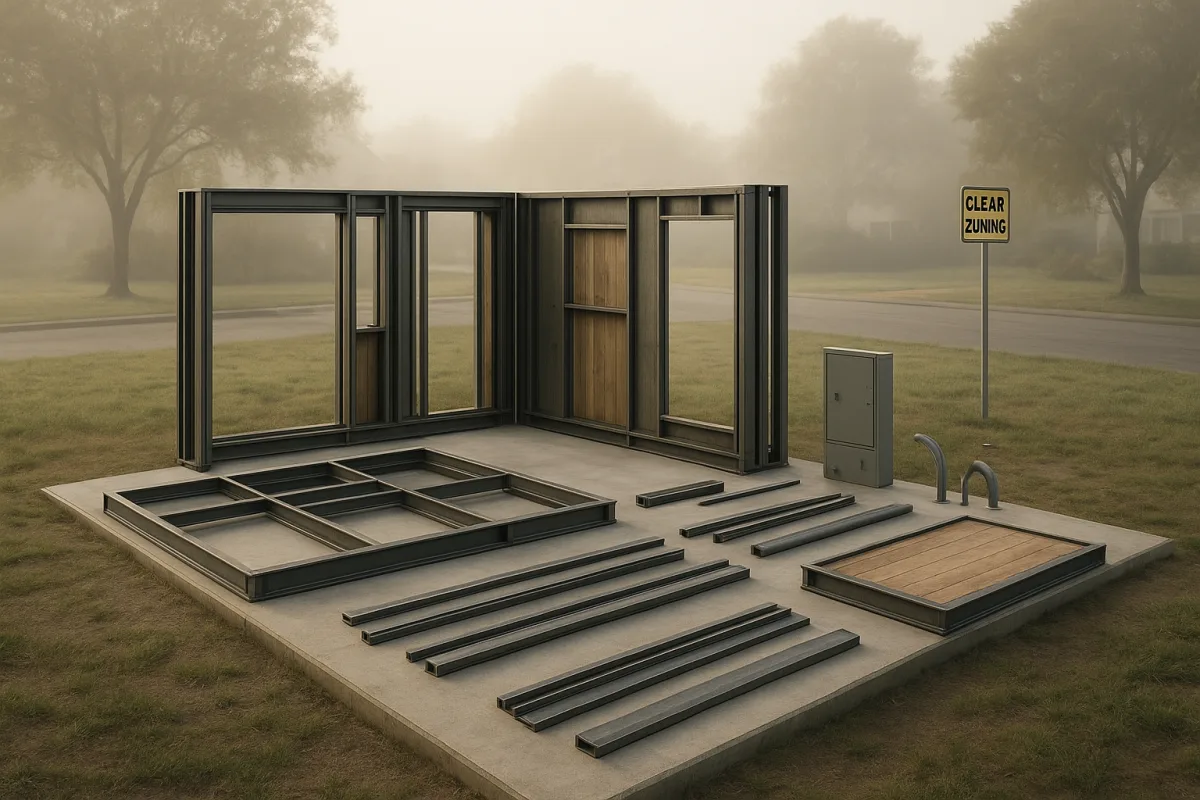
Affordable Prefab Tiny Homes Under 100K
Explore affordable prefab tiny homes under 100K with cost breakdowns, kit options, and legal considerations to help you choose the right small home.
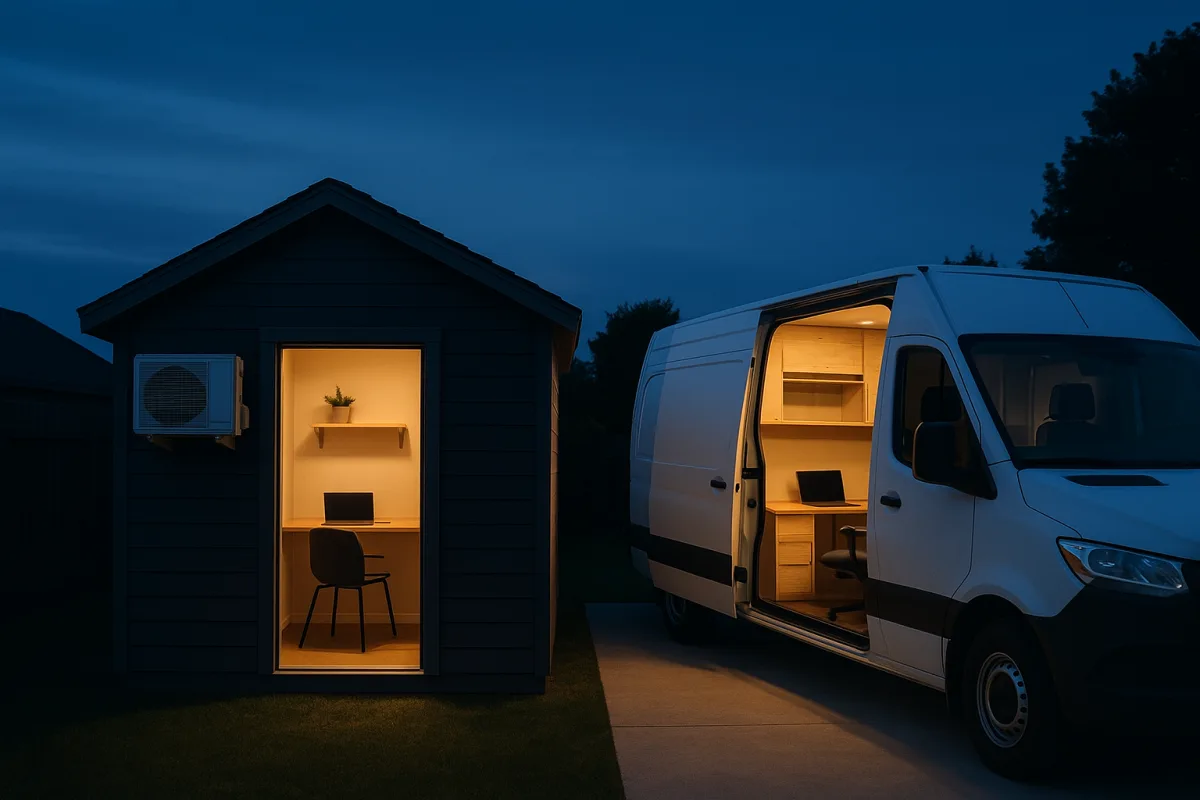
Tiny House Office Conversion: Shed vs. Mobile Van Workspace
Explore tiny house office conversion options: backyard shed offices with mini splits or mobile van workspaces, costs, comfort, and permits explained.