
Expandable Container Home Costs: What You Need to Know
Learn the true costs of expandable container homes, including pricing, permits, site work, and financing options for affordable prefab housing.
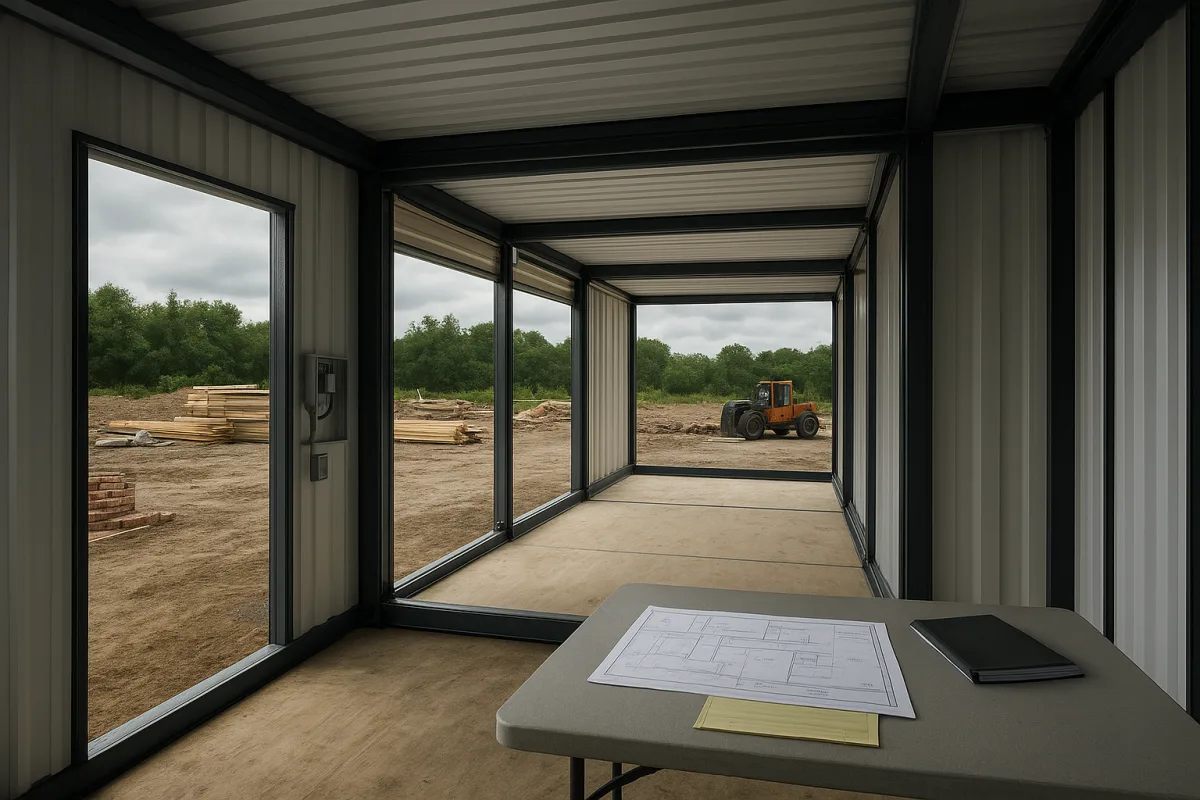
The shift is real, but the $10,000 headline needs translating
Expandable prefab container homes are moving from trade-show curiosity to a recognizable low-cost housing category. Multiple sellers now offer steel-framed units that travel folded, then open into a larger room on site, with advertised starting prices below $10,000.
The evidence is not one viral listing. Prefab Homes and Tiny House has assembled a broad field of Chinese manufacturers, US-facing resellers and established folding-home brands, while UVO Construction reports 20-foot expandable units advertised from $6,999 to $15,000. [1]
That said, this is a growing sales category, not yet a mature housing market. Campfortree Prefab cites strong global market growth and 16.8 percent year-on-year growth in Chinese folding housing during 2025, but those figures come from a seller, not independent market research. [9]
The important distinction is between a house-shaped product and a legally inhabitable home. Fold-out units can be remarkably cheap to manufacture and ship, but a buyer still has to turn that product into an approved, connected and weather-appropriate dwelling.
Why folding designs are gaining ground now
The basic appeal is logistical. A conventional tiny house on wheels takes up its full road width during delivery. A fold-out container-style unit arrives compact, then expands after unloading, making freight more efficient than moving a completed wide structure.
Prefab Homes and Tiny House describes these homes as folded steel-framed units, often shipped in a container-like format before side walls and roof sections open outward. Depending on the model, a compact transport footprint can become several hundred square feet of interior space.
That format fits several current needs at once: a backyard ADU, a remote work room, a temporary project accommodation unit, a small rental cabin or an entry-level retreat. It also appeals to buyers priced out of conventional new construction.
The less glamorous reason is that factories can standardize the steel frame, doors, windows and basic interiors. Standardization can reduce labor and waste, though it also means buyers must be careful about insulation levels, wiring standards and whether a layout fits local code.
There is also a useful design lesson in the 258-square-foot Flacon Cargo Module covered by Yanko Design. Its Russian designers used flush plywood storage and integrated furniture to preserve a clear central walkway, rather than filling every open surface with loose furniture.
That approach matters more than the container itself. In a narrow expandable unit, storage planned into the walls and kitchen perimeter can make the room feel workable. But built-ins also make the layout less forgiving when your habits, equipment or furniture differ from the plan.
The advertised-price field, and who each option suits
Reach Top, also called RTOP House in the Prefab Homes and Tiny House roundup, publishes unusually clear factory pricing. Its 20-foot single-side expandable starts around $5,000 FOB, a standard 20-foot model around $7,250, a 30-foot model near $9,250 and a 40-foot version about $10,650.
Reach Top suits importers, contractors or buyers ordering several units, rather than a first-time homeowner wanting one delivered and connected. FOB means the unit is priced at the Chinese factory dock, excluding ocean freight, duties, inland transport and local setup.
Cho Mex is presented by Prefab Homes and Tiny House as a Brooklyn-based seller offering 40-foot expandable homes in roughly 800-square-foot two-bedroom and 865-square-foot three-bedroom layouts. The supplied material gives no specific price, so it should not be compared honestly with $9,000 factory shells.
Cho Mex appears better suited to buyers who value a domestic business contact and need more space than a studio. The trade-off is that larger, more complete layouts will not compete with the cheapest imported base-unit prices.
Hebei Baida Mingsheng Integrated Housing, a Chinese manufacturer featured by Prefab Homes and Tiny House, reportedly prices expandable models from below $10,000 into the low teens on an FOB basis. That makes it a volume-buying or importer option, not a simple one-unit retail purchase.
Integrated Housing, another Chinese expandable-home specialist in the Prefab Homes and Tiny House roundup, quotes compact units in roughly the $9,000 to $12,000 FOB range. It suits buyers who need customization of windows, doors, insulation or finishes and can manage international purchasing.
For both Hebei Baida Mingsheng Integrated Housing and Integrated Housing, insulation is the question to ask before color, flooring or cabinetry. A low price can reflect a thin panel specification intended for a mild climate, not a cold winter or hot desert site.
Nestron’s Cube 2X represents the opposite end of the field. Prefab Homes and Tiny House places its listed starting price around $99,800, with a quoted base price near $104,800, for a furnished smart-home-style prefab rather than a bare expandable shell.
Nestron suits a buyer seeking a finished product, integrated appliances and a more controlled design package. It does not suit someone whose main goal is the lowest possible upfront cost, and it shows why comparing every fold-out structure as though it were equivalent is misleading.
Campfortree Prefab, described in the roundup as a US-facing online seller, offers a 20-foot modular expandable house at a low-five-figure price, though the supplied material does not provide an exact figure. It suits shoppers who prefer a retail-style product page and clearer purchasing path.
Pac Prefab also occupies the low-to-mid-five-figure range, according to Prefab Homes and Tiny House, without a specific quoted model price in the supplied material. It suits cautious first-time buyers who want clearer delivery expectations than an unmediated overseas marketplace listing.
Express Container Homes offers a 40-foot expandable container home starting around $24,500, according to Prefab Homes and Tiny House. It suits buyers willing to pay above factory-shell pricing for a US-facing storefront and a more defined sales process.
Boxabl’s studio-scale Casita has historically been marketed around $50,000 to $60,000 for the unit, according to Prefab Homes and Tiny House. It suits buyers prioritizing a recognizable US brand, code-oriented construction and support, rather than bargain-basement square footage.
Cherry Industrial is the final seller named in the Prefab Homes and Tiny House roundup, but the supplied transcript ends before giving a model or price. It may be relevant to shoppers comparing US-facing modular and shelter sellers, but there is not enough supplied evidence to price it responsibly.
That lack of complete pricing is not a minor editorial problem. It reflects the shopping reality. Many expandable-home listings display a compelling base number while leaving freight, crane or equipment needs, site access, foundations, utility connections and interior options to later conversations.
What the real budget looks like
The floor price is real in a narrow sense. EasiHive reports folding container houses advertised from $1,800 to $4,000, while UVO Construction places 20-foot expandable container homes at $6,999 to $15,000. [1][2]
Neither figure is a reasonable all-in housing budget. UVO Construction estimates delivery and installation at $800 to $3,500, while PrefabMarket puts foundation and site preparation at $3,000 to $15,000. [1][3]
Permits and utility hookups can add another $2,500 to $13,000 combined, according to PrefabMarket. [3] Even the lower end assumes accessible land, uncomplicated services and a jurisdiction willing to approve the unit.
For that reason, the research brief’s estimated all-in range of $16,649 to $45,800 for a 20-foot project is more useful than any under-$10,000 ad. [1] It is still a broad estimate, not a quote for your lot.
A practical buyer should request an inclusions list before paying a deposit. Ask whether the price includes insulation thickness, finished floors, electrical panel, plumbing rough-in, bathroom fixtures, cabinets, appliances, windows rated for local conditions and delivery to the actual site.
Then price the work the seller cannot do: driveway upgrades, excavation, piers or slab, crane access if necessary, trenching, meter installation, septic or sewer connection, water service and final inspections. Those items decide whether the bargain survives contact with reality.
Code, financing and long-term ownership
There is no national ban on container homes, but there is no nationwide approval path either. ZoningPoint notes that residential zoning, setbacks, minimum dwelling sizes and design standards vary widely, while the IRC does not specifically resolve shipping-container construction. [4][5]
Some places are becoming friendlier to small secondary homes. California’s ADU rules can make an approved container-based ADU more feasible, and Arkansas passed a 2025 law limiting local restrictions on ADUs, but neither change guarantees that a particular expandable unit will pass local review. [4]
Start with the planning department, then speak to building officials before ordering. Ask whether the project is treated as a manufactured home, modular building, accessory structure, RV, temporary structure or conventional dwelling. Also check deed restrictions and HOA rules separately.
Financing remains another weak point. A low-priced movable unit rarely fits a standard mortgage model, especially before it is permanently attached to approved land. Personal loans are common, but the payments can be demanding, and chattel loans commonly run 8 to 12 percent interest. [6]
Resale is similarly uncertain. There is no comprehensive resale dataset specifically for expandable container homes. Available estimates suggest permitted, permanent-foundation container homes may retain 60 to 75 percent of original value after ten years, but that is indirect evidence, not a dependable valuation rule. [7][8]
Running costs may be favorable if the unit has credible factory insulation and airtight construction. Prefab.com estimates energy savings of 10 to 40 percent compared with traditional homes of similar size, but actual performance depends heavily on climate, panel specification and installation quality. [10]
The final trade-off is lifespan. Campfortree Prefab estimates prefab container homes at roughly 25 to 50 years, compared with 50 to 100 years for traditional tiny houses, though those are broad category estimates rather than guarantees for any model. [9]
For a cabin, ADU or carefully permitted small dwelling, an expandable prefab can be a sensible shortcut. For a primary home, the smart move is to spend less attention on the folded-house reveal and more on the unglamorous documents: plans, code pathway, insulation specification, warranty and installed budget.
Frequently Asked Questions
What is the realistic total cost of an expandable container home?
A 20-foot expandable container home advertised under $10,000 is typically a factory-price shell. Realistic total costs including delivery, site work, permits, and utility hookups generally range from about $16,649 to $45,800. This reflects additional expenses beyond the base unit price, such as installation and foundation preparation.
How much do permits and site work add to container home prices?
Permits and utility hookups can add between $2,500 and $13,000 to the total cost. Site work and foundation preparation typically range from $3,000 to $15,000. These costs vary by location and are necessary to make the unit a legally approved, connected, and weather-appropriate dwelling.
Are expandable container homes affordable for full-time living?
The cheapest expandable container homes are often best suited as seasonal cabins, backyard rooms, or temporary offices rather than full-time residences. A full-time home requires documented insulation, a compliant foundation, and a reliable local service plan, which increase costs and complexity.
What financing options are available for expandable container homes?
Cash payment is usually the simplest financing method. Traditional mortgages are difficult to obtain for movable or unpermitted units. Personal and chattel loans are alternatives but often have shorter terms and higher interest rates, typically around 8 to 12 percent.
How do local zoning laws affect the cost of container homes?
Local zoning, building codes, and HOA restrictions vary widely and can significantly impact whether a container home is allowed and at what cost. Buyers must confirm minimum dwelling sizes, setbacks, and code requirements locally, as container homes are not federally banned but require local approval.
How we researched this
This article was assembled from 1 video source, 1 published article, 10 cited references.
Nothing here is based on hands-on testing. Where a figure or finding appears, it belongs to the source cited beside it, and the writing says so rather than implying otherwise. Every source is listed below so you can check it.
Sources
10 Cheapest Expandable Prefab Container Homes You Can Buy Right Now — Prefab Homes and Tiny House
A 258-Square-Foot Container Cabin Without the Visual Clutter — Yanko Design
Expandable Container House in the USA: 2026 Cost, Permits & Buyer's Guide - UVO Construction
Tiny Home Cost in 2026: What Each Build Type Costs | PrefabMarket
Are Container Homes Legal? Zoning & Building Code Guide (2026) | ContainerCompass
How to Finance a Container Home in 2026 (What Actually Works)
Container Home Resale Value: Do Prefab Homes Hold Their Value?
Watch Expandable and Affordable Prefab Container Homes on Youtube
Related Articles
Prefab Tiny Home Kits Cost Breakdown and Features
Explore prefab tiny home kits cost breakdown under $100K, including features, installation, and financing challenges for buyers.
Tiny Home Build Costs Breakdown
Explore a detailed tiny home build costs breakdown, including site prep, financing, and budgeting tips for self-built tiny homes.
Affordable Prefab Tiny Homes Under 100K
Explore affordable prefab tiny homes under 100K with cost breakdowns, kit options, and legal considerations to help you choose the right small home.
Affordable Park Model Homes: Costs, Placement & Features
Explore affordable park model homes, pricing, permits, and what to budget for site prep and finish in tiny cabin homes.